
Greece · europe
The Second Andalusia: The Emirate of Crete
Exiled from Spain, a band of Andalusian Muslims sailed the length of the Mediterranean, burned their own ships, and built a state that ruled the Aegean for 135 years.
Founded by Muslims from Córdoba, the Emirate of Crete ruled the Mediterranean for roughly a century and a half. The story of a band of exiled Andalusian Muslims who, driven from their homeland, seized one of the Mediterranean’s most strategic islands and built a state on it is one of the stranger episodes in history.
Crete is the fourth-largest island in the Mediterranean. Called Crete in Western languages and Iqritiyya or Iqridish in the Islamic sources, the island sits at a profoundly strategic point, linking the Aegean, Anatolia, Syria, and Egypt. That position drew the attention of every great civilisation, and kept the island at the centre of contests for control.
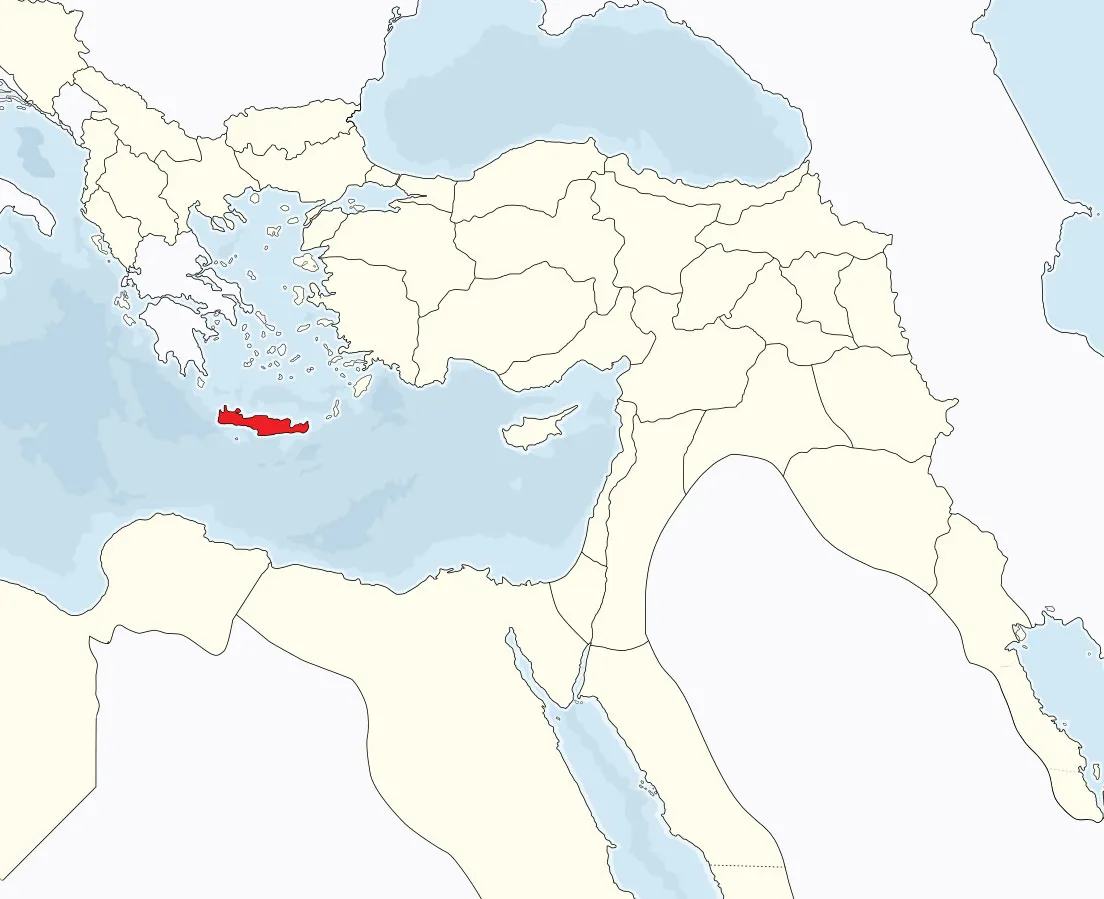
The first Islamic raids on Crete reach back to the reign of the Umayyad Caliph Muawiya (661–680). Armies under Cünâde bin Ebî Ümeyye took much of the island in campaigns between 673 and 684, but no lasting dominion was established then. Crete becoming a true Muslim land — with an independent Muslim state — would come later, and at the hands of Andalusian Muslims.
From Exile to Conquest
That Andalusian Muslims could set out from the far western edge of Europe and conquer Crete thousands of kilometres away was no accident. Behind the conquest lay a bitter story of exile and forced migration. It began in 818 with the Rabad (Suburb) Revolt in Córdoba. After the Umayyad Emir al-Hakam I crushed the uprising in blood, some fifteen to twenty thousand Muslims were exiled from their homeland.
The first door opened to the exiled Andalusians by Idris II, ruler of Morocco, who invited them to settle in Fez. After a time they moved east toward Alexandria, under the leadership of Abu Hafs Umar al-Balluti. The Andalusian migrants lived in Alexandria for twelve years (815–827); arriving as refugees, they came in time to dominate the city’s administration, and finally seized Abbasid-held Alexandria entirely and established their own rule.
But the Abbasid Caliph al-Ma’mun, to restore order, dispatched his powerful commander Abdullah bin Tahir, who besieged Alexandria and forced the Andalusians to leave. He told them that if they departed peacefully, the value of their goods would be paid, and they would be free to settle on any island in the Mediterranean they chose.
With no other choice, the Andalusians accepted. A community of fifteen to twenty thousand boarded ships with a large sum of money, and chose Crete as their final destination. At the time Crete was Byzantine territory. According to the sources, the Muslims landed with roughly forty ships. Accounts of the date differ, but Byzantine sources give it as 823.
A New Homeland
After taking Crete, the Muslims settled in the region of present-day Candia (Heraklion). Because of the deep ditches they dug around the city, they named it, in Arabic, al-Handak (“the moat”). Every Byzantine fleet sent to dislodge them failed.
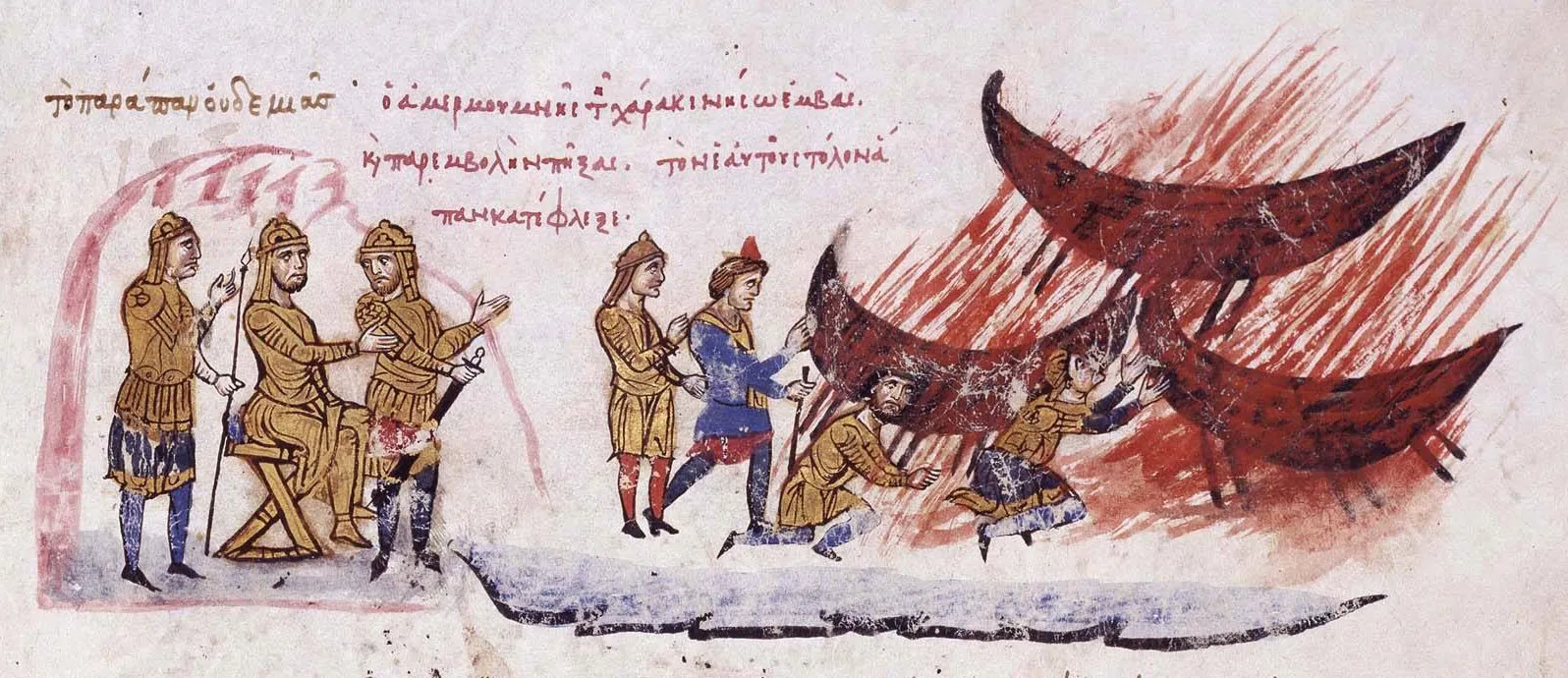
One of the most striking accounts of the conquest is that Abu Hafs burned the ships so his soldiers would have no hope of returning. He is said to have addressed them: “I have brought you to a land flowing with milk and honey. This is your true homeland. Rest here, and forget your old lands.” The episode recalls Tariq ibn Ziyad’s famous burning of the ships on the Iberian Peninsula.
A Second Andalusia
Across roughly 135 years of rule on Crete, the Andalusian Muslims built a strong administrative structure. Nominally tied to the Abbasid Caliph, the island was divided into forty administrative districts and governed in orderly fashion. Wanting to make their new homeland a seat of learning and culture, the Muslims sent letters of invitation across the Islamic world. Scholars who had written works in hadith, jurisprudence, and history — Ibn al-Fahhar, Ahmad bin Khalid, Muhammad bin Isa — answered the call and taught on Crete.
After the conquest, the island’s largest church was turned into a mosque, and new mosques and madrasas were built. The Muslims revived intellectual and cultural life, making the island one of the region’s important centres. In this period Crete took on the character of a “second Andalusia.”
Cretan Muslims off Constantinople
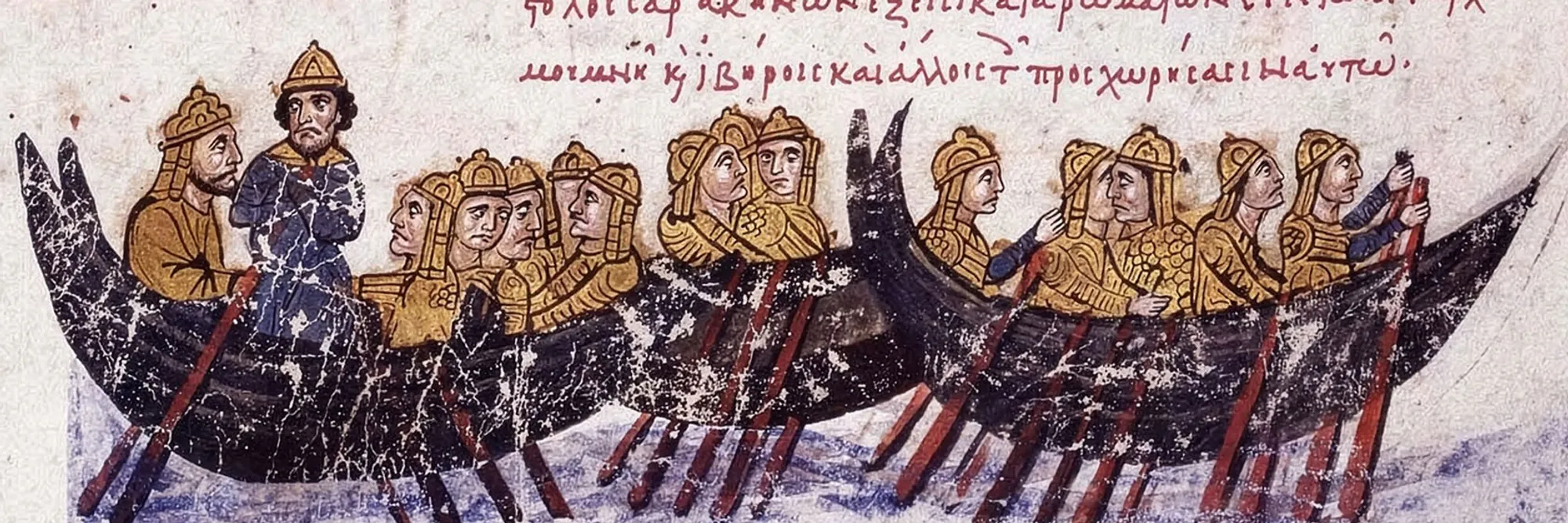
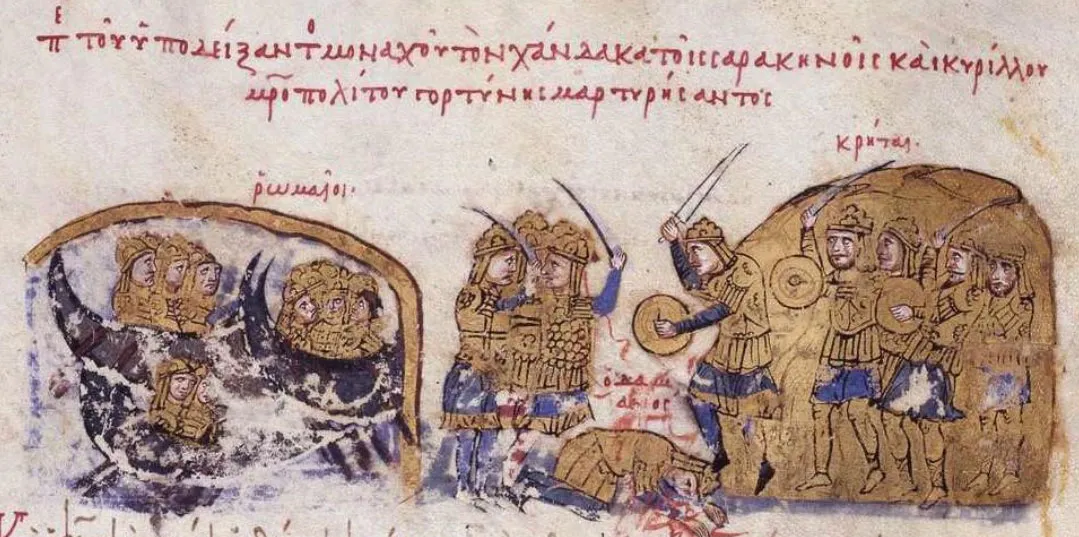
Through maritime trade, the Cretan Muslims reached great prosperity. They built a powerful navy, dominated the Aegean, and defeated Byzantium in many sea battles. According to Kâtip Çelebi, the Cretan fleet raided as far as the approaches to the Bosphorus, and Byzantium proved unable to stop the attacks. The near-total destruction of the Byzantine fleet near Thasos in 829 is one of the most striking examples of this dominance.
Falling for the Emperor’s Trick
Byzantium first tried to retake Crete by military expedition, then by diplomacy. It even attempted alliances with the nearby Umayyads of Andalusia and the Fatimids to halt the raids — without success.
The Emperor Romanos finally resorted to deception. By sending valuable gifts to the Cretan Emir Abdülaziz bin Şuayb, he won his trust. The Emperor offered the emir tribute and free trade across the Mediterranean in exchange for an end to the raids, and the emir fell for the trap.
On the pretext of famine relief, 500 horses and their handlers were then sent to Crete. But these handlers were spies, there to open the gates to the Byzantine army from within. With the final preparations complete, the Byzantine general Nikephoros Phokas landed on Crete. After an eighteen-month siege, Candia fell on 7 March 961, and the last emir, Abdülaziz bin Şuayb, was taken prisoner to Constantinople.
The emir had sent envoys begging help from the Abbasids, the Fatimids, and the Umayyads of Andalusia — and received a positive answer from none of them. With the city’s fall, the mosques were demolished, the libraries burned, and the traces of the Muslims systematically erased. So ended 135 years of Muslim rule on Crete.
Re-conquered, 700 Years Later
After the occupation, the Muslims who remained on the island were put under heavy pressure to convert. Some migrated to Muslim lands; those who stayed were forcibly Christianised — even the last emir’s son among them.
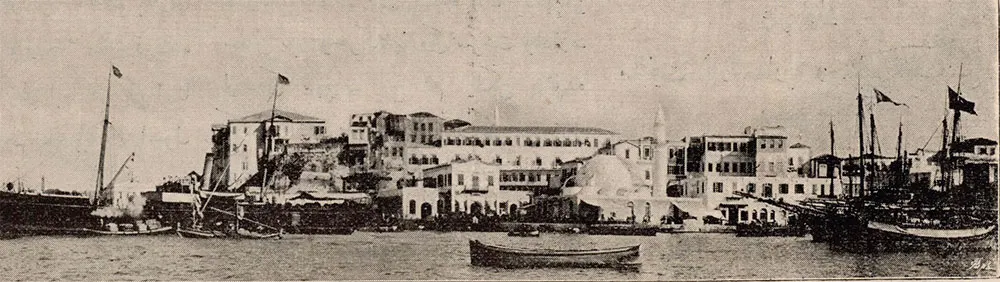
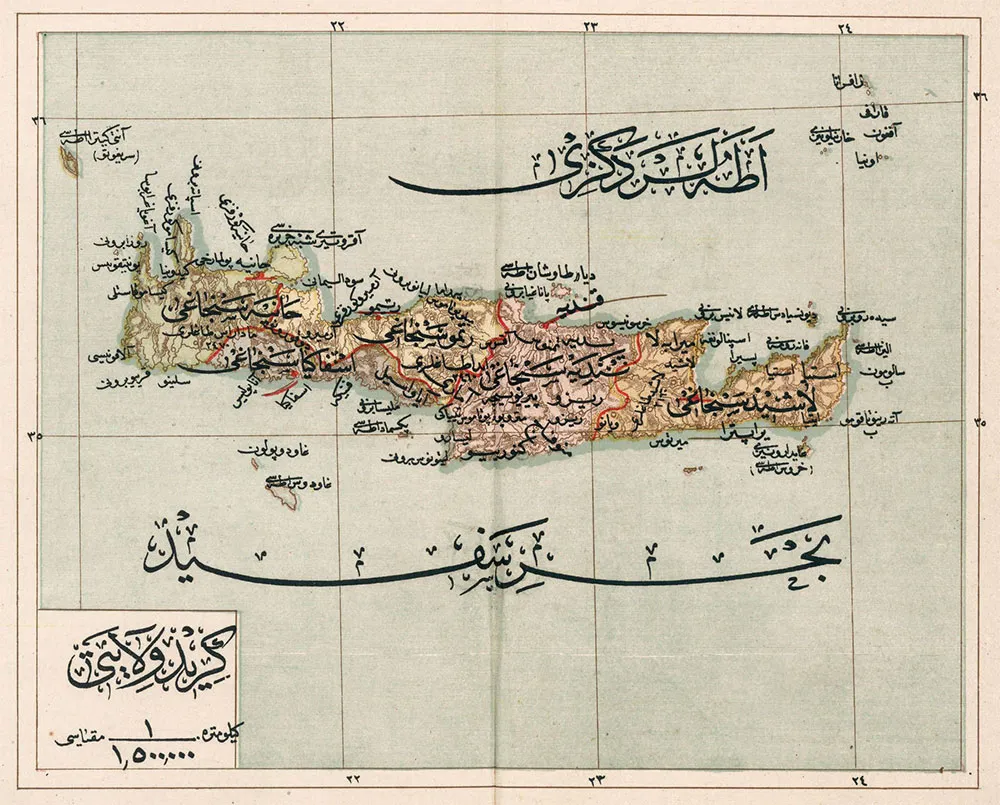
Crete would have to wait 708 years to become a Muslim land again. That second conquest came at the hands of the Ottomans: the Cretan campaign that began in 1645 under Sultan Ibrahim was completed in 1669. The island remained Ottoman territory for roughly two and a half centuries, until it was sorrowfully lost in 1913.
Sources
- Burak Arslan, Girit İslâm Emîrliği (827–961), master’s thesis, İzmir Kâtip Çelebi University, 2017.
- Feridun Bilgin, “İkinci Endülüs: Girit İslâm Devleti’nin Kuruluş ve Yıkılış Süreci (827–961),” History Studies, vol. 6, no. 6, December 2014, pp. 1–16.
- Cemal Tukin, “Girit,” Türkiye Diyanet Vakfı İslâm Ansiklopedisi (DİA), vol. 14, Istanbul, 1996, pp. 85–93.
Adapted from “İkinci Endülüs Girit Emirliği,” originally published in Yedikıta Dergisi.