
Japan · asia
The Sad Story of the Ertuğrul Frigate
120 years before Turkey and Japan became friends on paper, a single shipwreck bound them together forever.
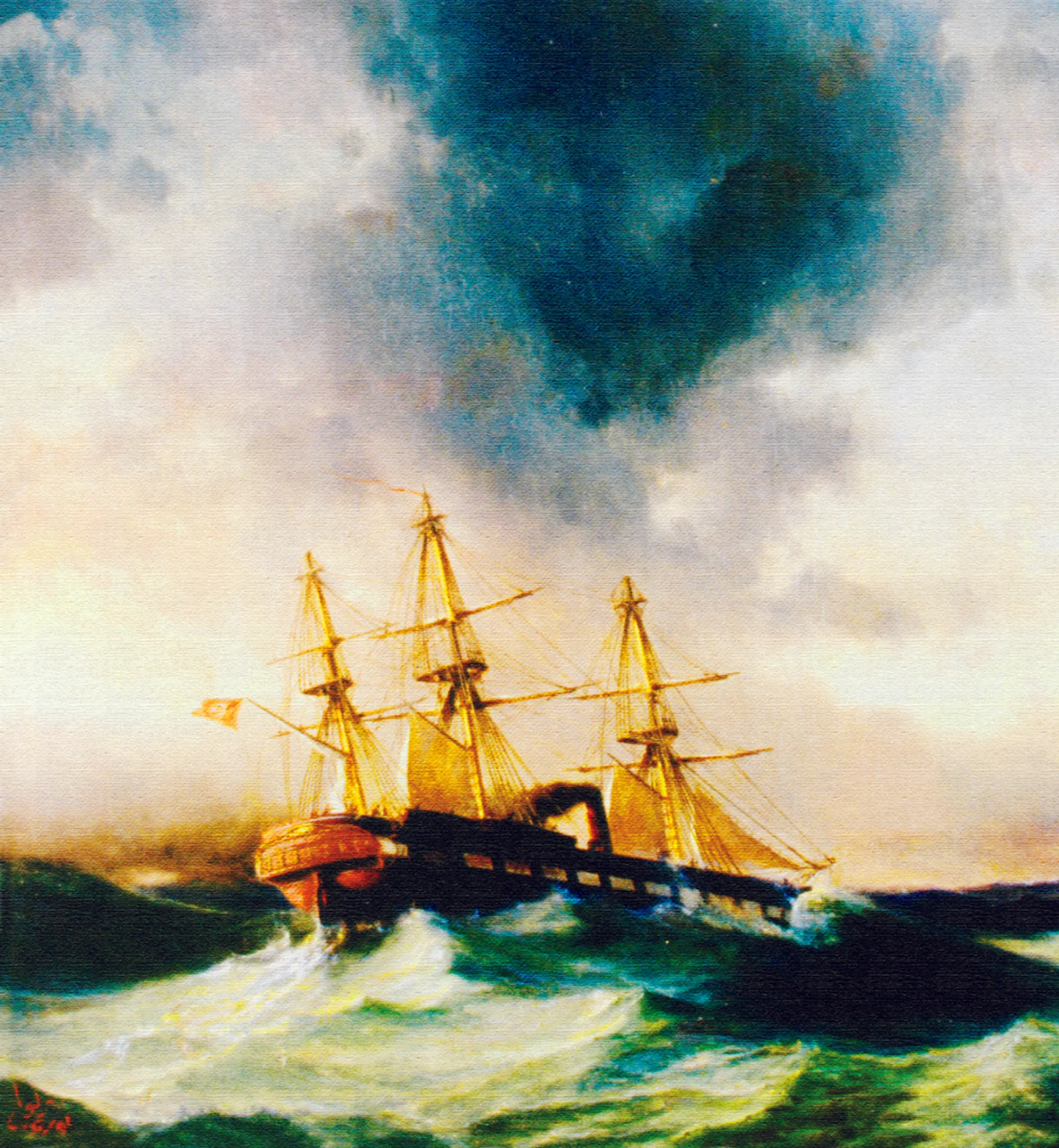
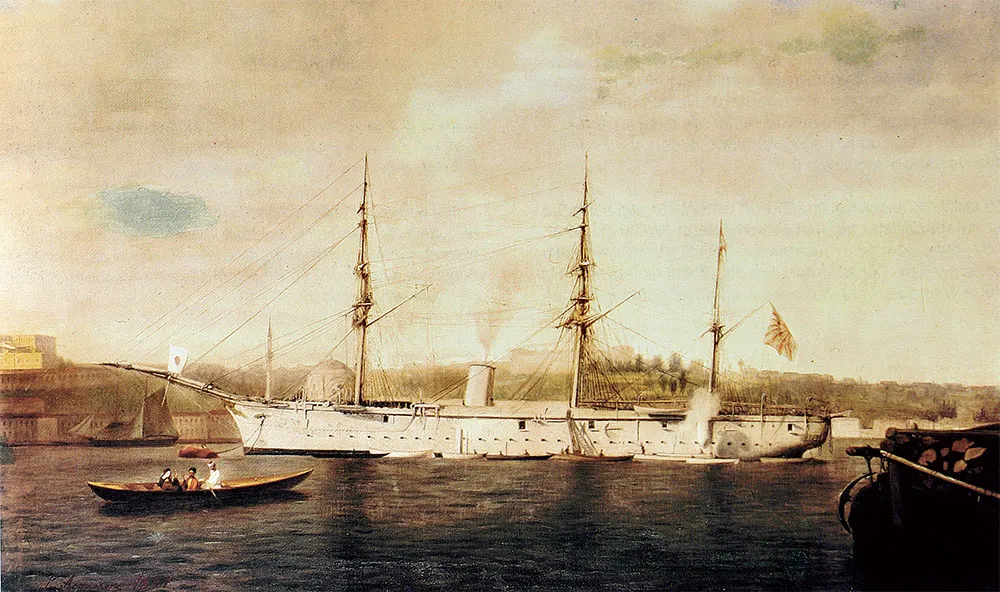
On a July morning in 1889, the crowds of Istanbul poured onto Sarayburnu to see off a ship most of them would never see again. The Ertuğrul — a three-masted Ottoman frigate named after the father of the empire’s founder — was about to sail to a country almost no one had visited: Japan. On board were 609 men: 61 officers and officials, 548 sailors. Fourteen months later, 527 of them would be at the bottom of the Pacific.
This is the story of a diplomatic voyage that ended on a rock, and of the friendship it accidentally forged.
Laying the Foundations of a Friendship
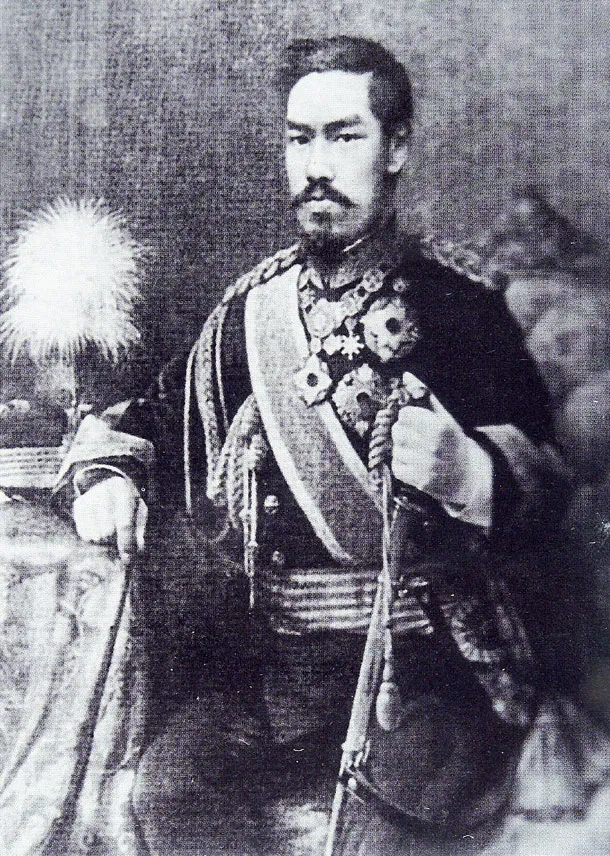
Ottoman–Japanese relations began barely a century before. Under Sultan Abdülhamid II, who pursued a balancing policy against the colonial West and Russia and used the authority of the Caliphate to extend Ottoman influence eastward, friendly ties with a rising Japan came onto the agenda. The foundation was laid in 1875 with a meeting in St Petersburg between the Japanese envoy and the Ottoman ambassador. In 1887, Prince Komatsu — uncle of Emperor Meiji and the first Japanese royal to visit Istanbul — was received by Abdülhamid II. The Emperor Meiji sent the Sultan the Grand Order of the Chrysanthemum; the Sultan would return the courtesy with a decoration of his own, carried to Tokyo by an Ottoman warship.
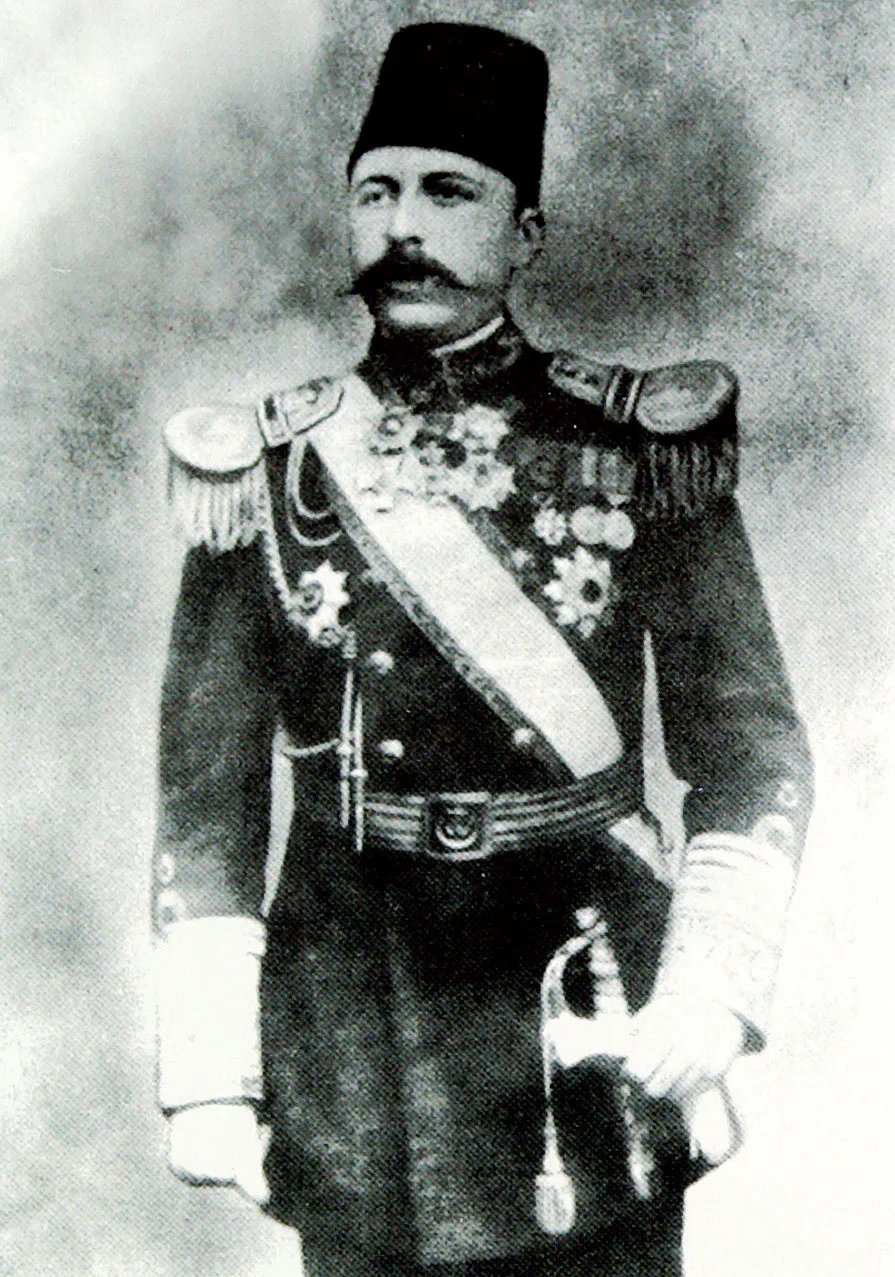
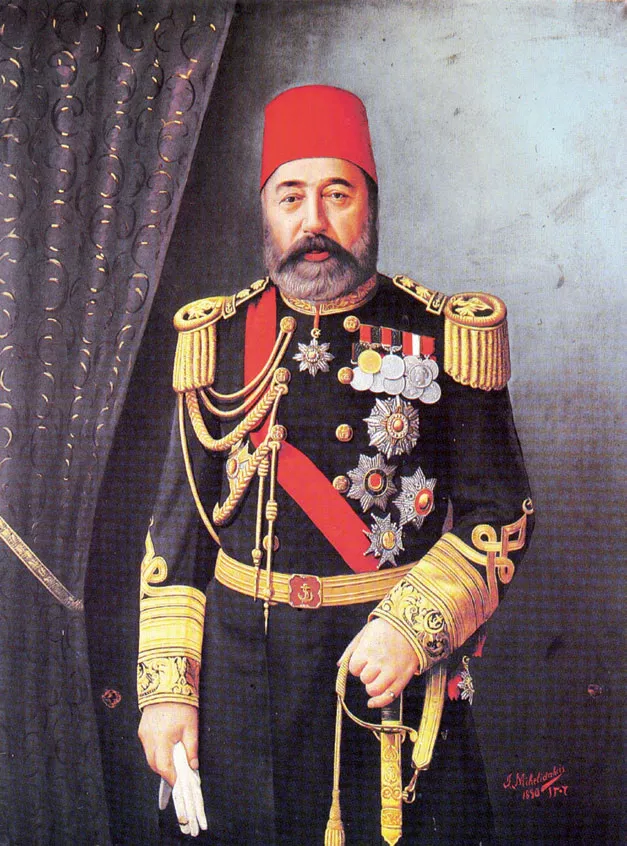
The ship chosen was the Ertuğrul. The voyage would return Prince Komatsu’s visit, strengthen the bond between the two countries, and let cadets of the Naval Engineering School see foreign shores. When voices rose warning that the ageing frigate was not fit for the journey, the Sultan ordered a full report; the technical commission declared her engines sound and her boiler good for three or four more years of service. Command went to Colonel Osman Bey — promoted to Rear Admiral mid-voyage, and thereafter Osman Pasha — son-in-law of the Navy Minister, Hasan Hüsnü Pasha.
A Journey the World Watched
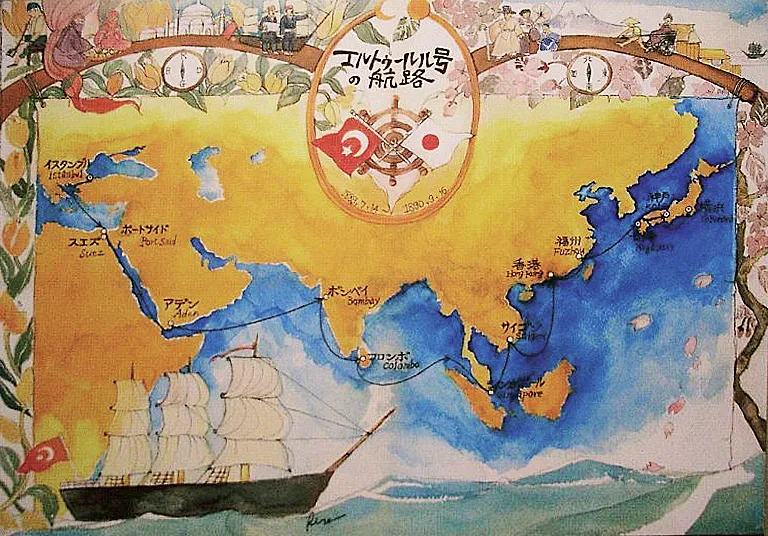
The Ertuğrul sailed on 14 July 1889. Almost at once she ran into trouble: on 28 July, despite her pilot, she grounded in the shallows of the Suez Canal, and the wind snapped her rudder post. Repairs cost the expedition its summer window. From there the ship crawled east — Port Said, Jeddah, Aden, Bombay, Colombo, Singapore, Saigon, Hong Kong — often delayed for weeks waiting for coal, weather, or money.
Wherever she went, local Muslims treated her arrival as a holiday. In Bombay, some 20,000 people came aboard in a day; by the end of the week, about 150,000 had seen her. In Singapore she was held up for more than four months waiting for the weather. To the imperial powers watching from London and The Hague, the visible loyalty of their Muslim subjects to a distant Caliph was deeply unwelcome.
“On Friday, around 150 officers and men of the frigate, very neatly dressed, went to the mosque to pray. On the way they were saluted with deep respect by a vast crowd.”
— Advocate of India, 29 October 1889
Tokyo, Briefly
The Ertuğrul finally entered Yokohama on 7 June 1890 — almost a year after leaving Istanbul. The harbour erupted: salute guns fired while thousands of Japanese cried “Banzai!” Osman Pasha was received by Emperor Meiji and presented the Sultan’s decoration and gifts. For three months the officers and crew were honoured guests.
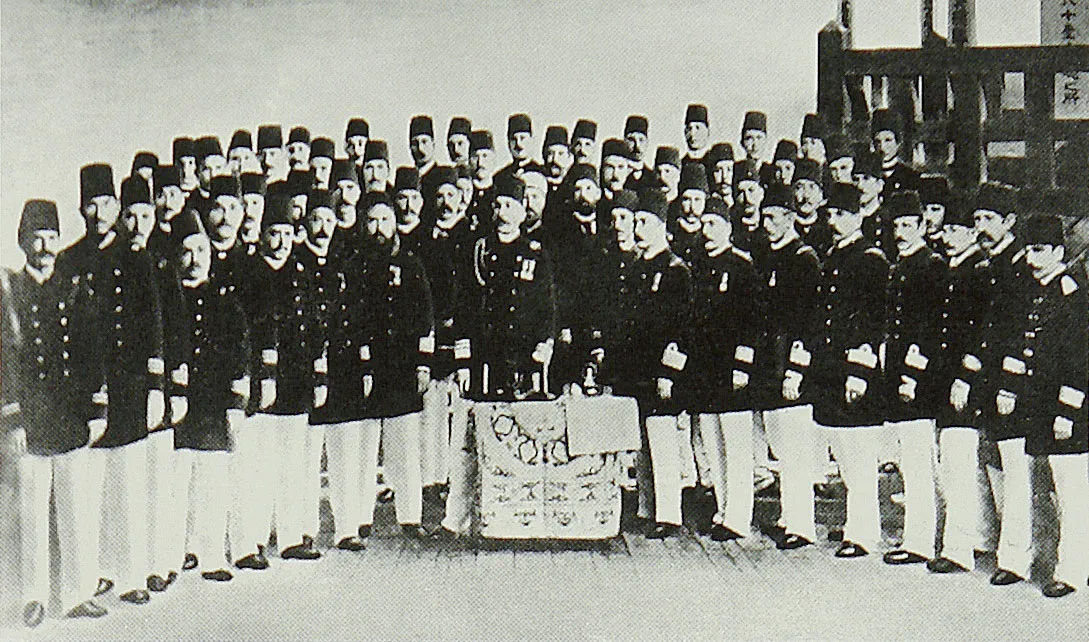
The business of empire done, the ship prepared for home. But a cholera outbreak struck the crew — 35 fell ill, 13 died — and the departure slipped further. By September she was ready. The monsoon season was not.
Mountainous Waves
On 15 September 1890, the Ertuğrul sailed from Yokohama despite warnings of a typhoon. By the following evening the wind was at gale force. Her engines ran at full power; it made no difference. Mountainous waves and wind drove her steadily toward the jagged southern tip of Oshima island at Kashinozaki, Wakayama. At around 21:00 on 16 September, the Ertuğrul struck the Funakura rocks. She broke in two almost at once and slipped beneath the surf.
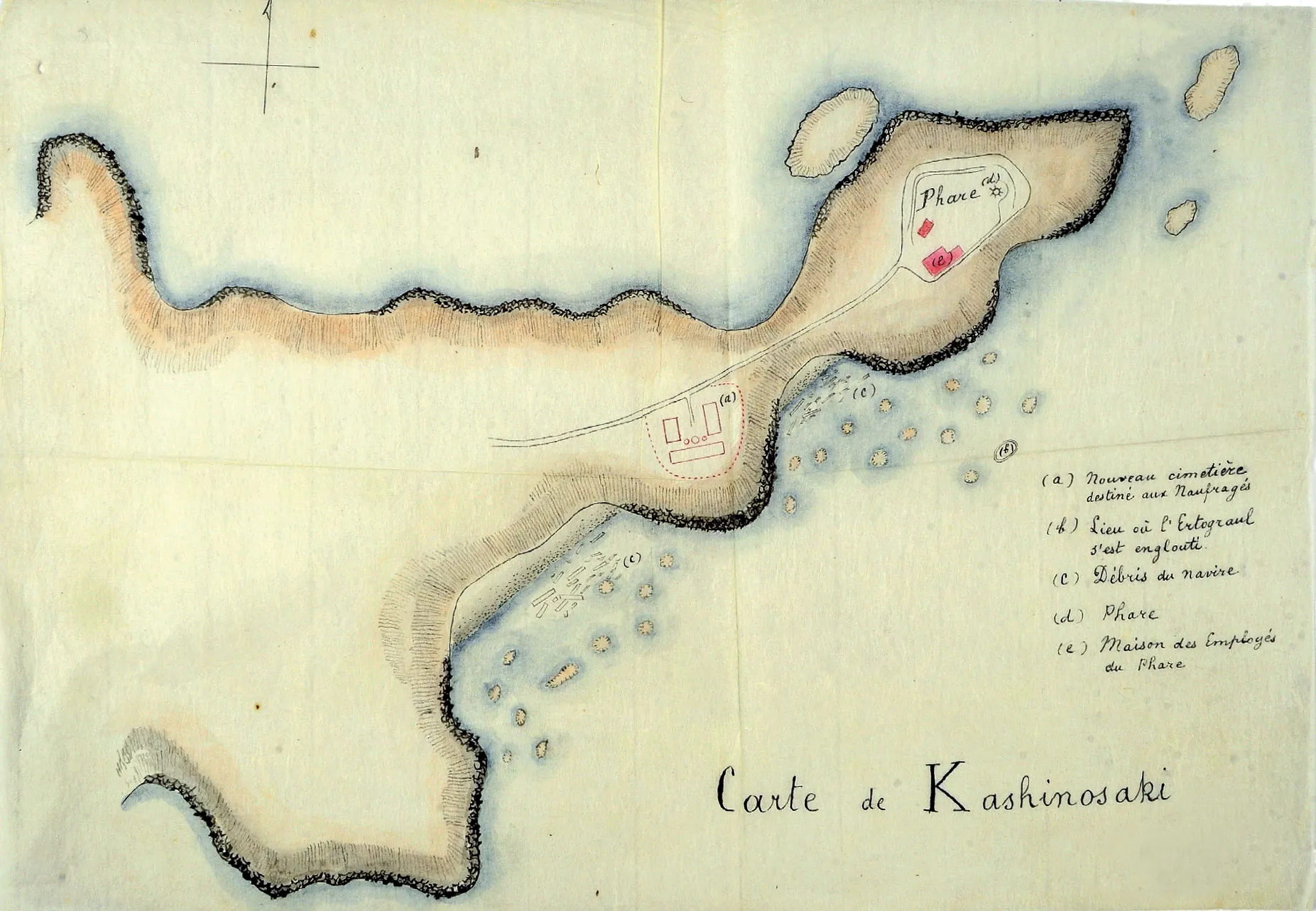
Of the 609 men who had left Istanbul, 13 had already died of cholera. Another 527 — including Osman Pasha — drowned or were killed on the rocks that night. Sixty-nine survived.
The Villagers of Kashino
They survived because of the lighthouse keepers and the fishermen of Kashino. Battered survivors who could not speak Japanese made themselves understood by their flag’s markings; a runner was sent to the village. Through the night, villagers carried the wounded to shelter, stripped them of soaked uniforms, and warmed them. The next morning the mayor of Oshima organised care and, with the villagers, recovered 260 bodies from the sea.
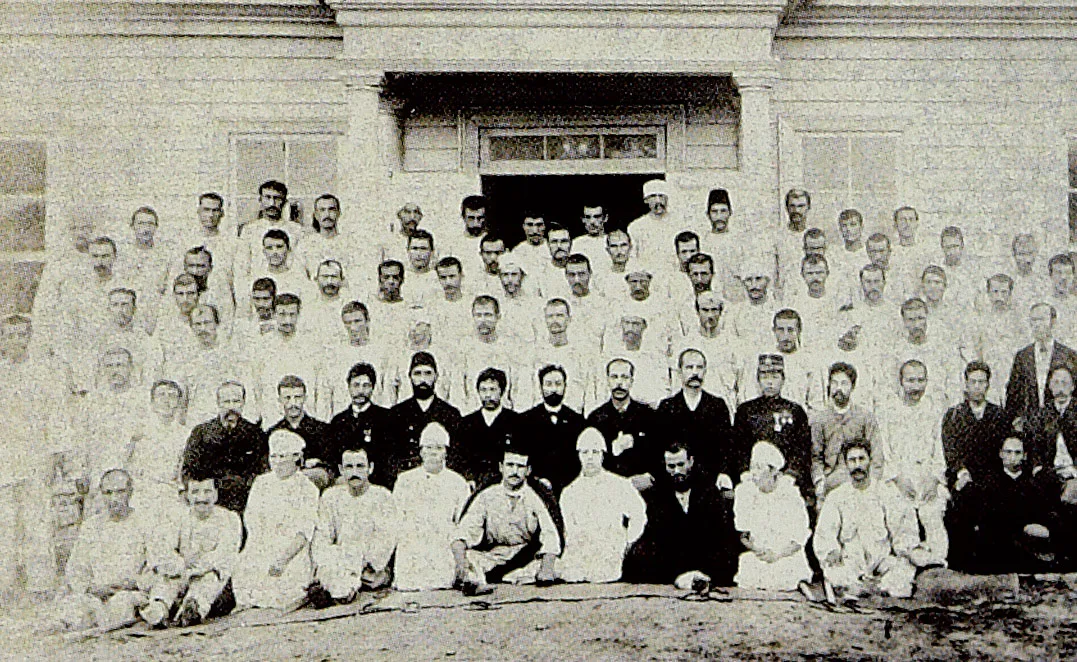
The German gunboat Wolf, in port at Kobe, was first to sail; its doctor and officers took 65 wounded men aboard and delivered them to a Kobe hospital where the emperor’s own doctors were waiting. The news of the wreck reached Istanbul only three days later, after travelling by telegram through Hiogo, the Ottoman ambassador in London, and Reuters.
An Accidental Friendship
Japan ordered two warships, the Kongō and the Hiei, to carry the survivors all the way back to Istanbul — a voyage of months. They reached the city on 2 January 1891, to be met with emotional crowds; the Japanese captains were received by the Sultan and decorated.
In Japan, the disaster did what the diplomacy had not. Newspaper appeals raised money for the widows; a young journalist, Torajirō Yamada, travelled to Istanbul to deliver the donations and ended up staying for twenty years. Donation drives continued for generations, and the friendship rooted itself.
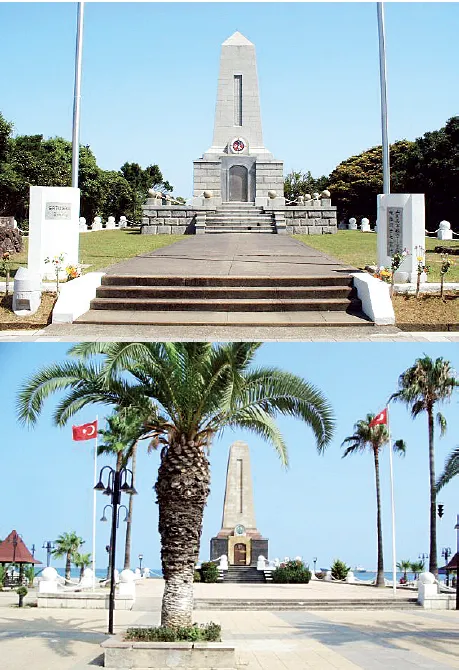
The martyrs were buried on the hill overlooking the wreck. A monument raised there was rebuilt in 1937 — visited by the Japanese Emperor in 1929 — and a replica stands in Mersin, Kushimoto’s sister city in Turkey. School children in Kushimoto still hold a memorial ceremony there.
In 1985, during the Iran–Iraq war, Saddam Hussein gave foreign nationals 48 hours to leave Iranian airspace before bombing began. Two hundred and fifteen Japanese citizens were stranded in Tehran; their own government could not reach them in time. Turkey sent two Turkish Airlines planes to evacuate them, leaving its own citizens to drive out overland. The Turkish ambassador’s explanation was brief: “We remember the Ertuğrul."
"Not a Catastrophe — an Accident at Sea”
The historian Erdoğan Şimşek pushed back gently on the Turkish habit of calling the sinking a facia, a catastrophe:
“The Ertuğrul was not the first of our ships to leave harbour and never return. She suffered one of the accidents that can befall any ship that carries a flag across the seas. To sail ships across oceans and show a nation’s colours is never as easy or as cheap as it looks. … The Ertuğrul is a single page from the glorious history of a navy that flew its flag in the Black Sea, the Aegean, the Mediterranean, the Red Sea, the Atlantic, and the Indian Ocean, and that carried out every task it was given.”
The Ertuğrul did what she was sent to do. She showed a flag; she was received with honours; she failed, in the end, only to come home. That she is remembered at all — a hundred and thirty-six years later, in schoolbooks on both sides of the Pacific — is the accidental proof that she succeeded.
Sources
- Süleyman Nutki, Ertuğrul Fırkateyni Faciası, Matbaa-i Bahriye, 1911.
- Kaori Komatsu, Ertuğrul Firkateyni: Bir Dostluğun Doğuşu, Ankara, 1992.
- Erdoğan Şimşek, Uzakdoğu Elçisi Ertuğrul Fırkateyni, Istanbul, 2005; and Dünden Bugüne Ertuğrul Fırkateyni, Istanbul, 2006.
- Şakir Batmaz, Bilinmeyen Yönleriyle 19. Yüzyıl Osmanlı Donanması, Istanbul, 2010.
- Erol Mütercimler, Ertuğrul Faciası ve 21. Yüzyıla Doğru Türk–Japon İlişkisi, Istanbul, 2010.
- Prime Ministry Ottoman Archives and the Naval Museum Archive (BEO, DH.MKT, HR.MTV, İ.DH, Y.MTV, and related collections).
Adapted from “Ertuğrul Firkateyni’nin Hazin Hikâyesi” by Osman Doğan, originally published in Yedikıta Dergisi. The Ertuğrul Memorial Cemetery stands on the cliff at Kushimoto, Wakayama Prefecture.