
Sweden · europe
Sweden's Ottoman Ships: Yaramaz and Yıldırım
A defeated Swedish king spent five years as the Ottomans' guest — and went home with sketches of Turkish warships that would later save his country.
The Great Northern War (1700–1721) is little remembered in Turkish history. But the Swedish king Charles XII — known to the Ottomans as Demirbaş Şarl, “Charles the Fixture” — is well remembered. Beaten by Tsar Peter and given refuge by the Ottomans, Charles spent his exile like a careful observer, studying Turkish culture, food, and army. One of the things that caught his eye was the Ottoman ships — and he decided to adapt them for his own navy.
A Country on the Edge of the Abyss
The calendar read 19 August 1809. The Swedes were locked in a life-or-death battle with a far stronger Russian army. It was the kind of fight in which either Sweden would vanish from the stage of history, or the Russian armies would be stopped at these last trenches.
The Swedes’ position was desperate. Facing them was a name that had not yet tasted defeat: General Nikolay Kamensky. The Russian general had already inflicted an unforgettable defeat on the Swedes, destroying their army in Finland and driving them first out of Finland and then out of Lapland. He meant to crown his march of victory by taking Stockholm itself, the heart of the Swedish kingdom.
Against him stood just 6,800 Swedish soldiers, dug in around the town of Sävar. The Russian Tsar Alexander had already dictated his peace terms to the Swedish king: “Give Russia Finland, Norway, and Norrland, and I will let you live in what is left of your country.” On 19 August, King Gustav IV sent the soldiers at Sävar a final message: “If you lose this battle, Sweden loses with you.”
The Ship That Cut Sweden Down from the Gallows
The next afternoon, the Russian army meeting the Swedish assault on the Sävar–Ratan line met an unexpected surprise. Two Swedish frigates, having slipped silently across the Russian-blockaded Baltic from end to end, opened fire on the Russian trenches with around a hundred guns. Panic spread through the Russian lines. But where had these Swedish frigates come from?
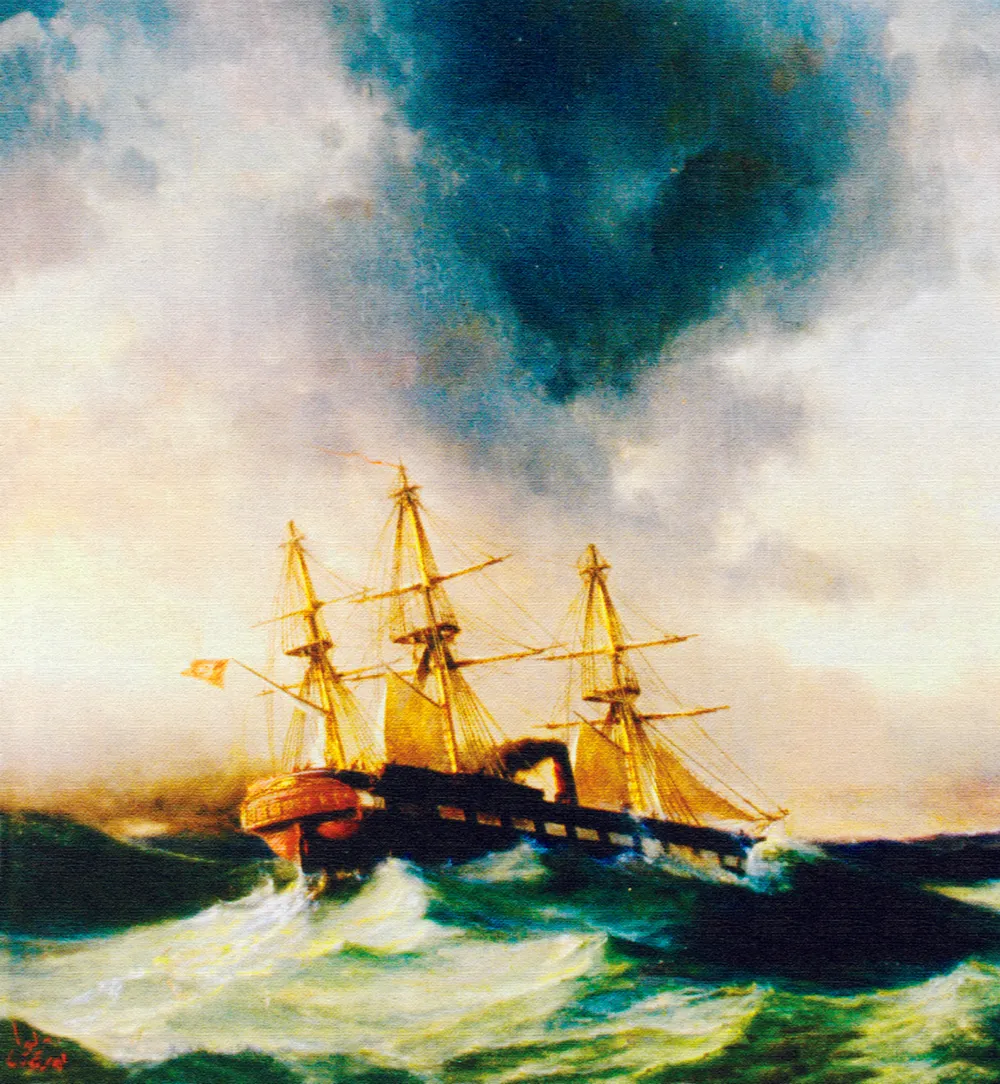
Suffering his first defeat, General Kamensky trained his telescope on the more impressive of the two ships firing in the dark blue Baltic. When he saw the frigate flying the blue Swedish naval ensign, he was astonished. This ship was the Jarramas — and it had just saved Sweden from annihilation. Thanks to this most critical battle in the country’s history, the Swedes managed to hold the north of their country — a region whose rich iron and chromium would later give the famous Swedish steel industry its single greatest share.
A Hundred Years Earlier…
What was the secret of this frigate Jarramas, and what did it represent? To solve it, we must go back exactly a hundred years, to the Battle of Poltava between the Swedish king Charles XII and the Russian Tsar Peter the Great. In the first eight years of the Great Northern War (1700–1721), Charles had defeated the allied armies of Denmark, Saxony, and Russia, and had then decided to march on Moscow. Near the town of Poltava, in today’s Ukraine, the great Russian Tsar — known to us as Deli Petro, “Peter the Mad” — finally learned how to win.
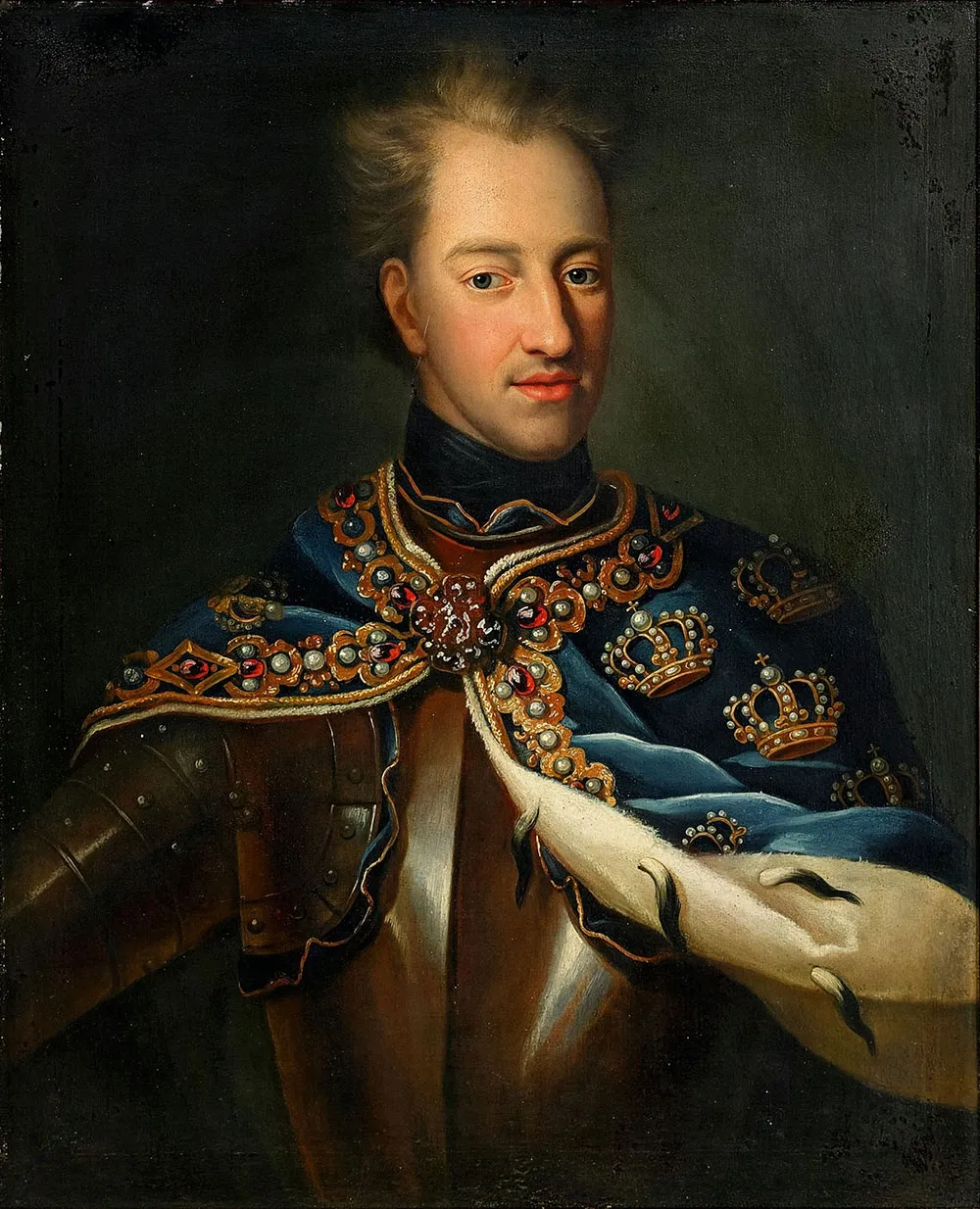
On 27 June 1709, the Swedish army suffered so total a defeat that it was all but destroyed. The only road open to Charles XII led south. With about a thousand soldiers, he was forced to take refuge with the Ottoman state, sheltering in the town of Bender. The Ottomans now had a guest they had not asked for.
The Ottomans’ Fixture
The defeated king, who announced he would stay only five days, ended up residing on Ottoman soil for five years. Having lost his army, he had become a political refugee — a king in exile. As survivors of the shattered Swedish army poured into Bender over the following six months, the Swedes camped around Charles swelled toward ten thousand. Sultan Ahmed III did not withhold his help, even buying back and freeing Swedish women and children whom the Russians had captured and sold as slaves. Charles built a small settlement near Bender, in present-day Moldova, which he called “Karlstad,” ringed with walls and earthworks, a tunnel dug from his house to his office. It was clear this “temporary” visit was nothing of the sort. The Swedes were settling in.
Hospitality Has Its Limits
Charles’s lengthening stay — and his building of a settlement — began to anger the Ottomans, especially as the Swedish community ran up serious debts with the merchants of Bender. The capital could no longer overlook it. The Ottoman government sent Charles a thousand purses of akçe so he could go home. But the king hesitated to leave. After a final offer, the Divan resolved that if he refused, he would be brought by force. When the king resisted the Janissaries sent to fetch him, the two sides drew swords. In the clash, Charles and his men were seized, and the king was wounded trying to flee. This skirmish entered Swedish history as the Kalabaliken i Bender. The Ottomans then held him under house arrest, first at Dimetoka, then briefly in Istanbul, then at Dimetoka again.
The Yaramaz and Yıldırım
Charles spent his Dimetoka days well, getting a close look at Turkish food and culture — at times growing a beard and wearing Ottoman dress, so that on his return home he behaved almost like an honorary cultural envoy. But the more important thing was the Ottoman navy’s ships, which the king had seen and admired on the shores of the Marmara during his time near Istanbul. A capable mathematician and engineer, Charles wanted the Swedish navy to have ships like the broad-beamed, highly manoeuvrable Turkish vessels.
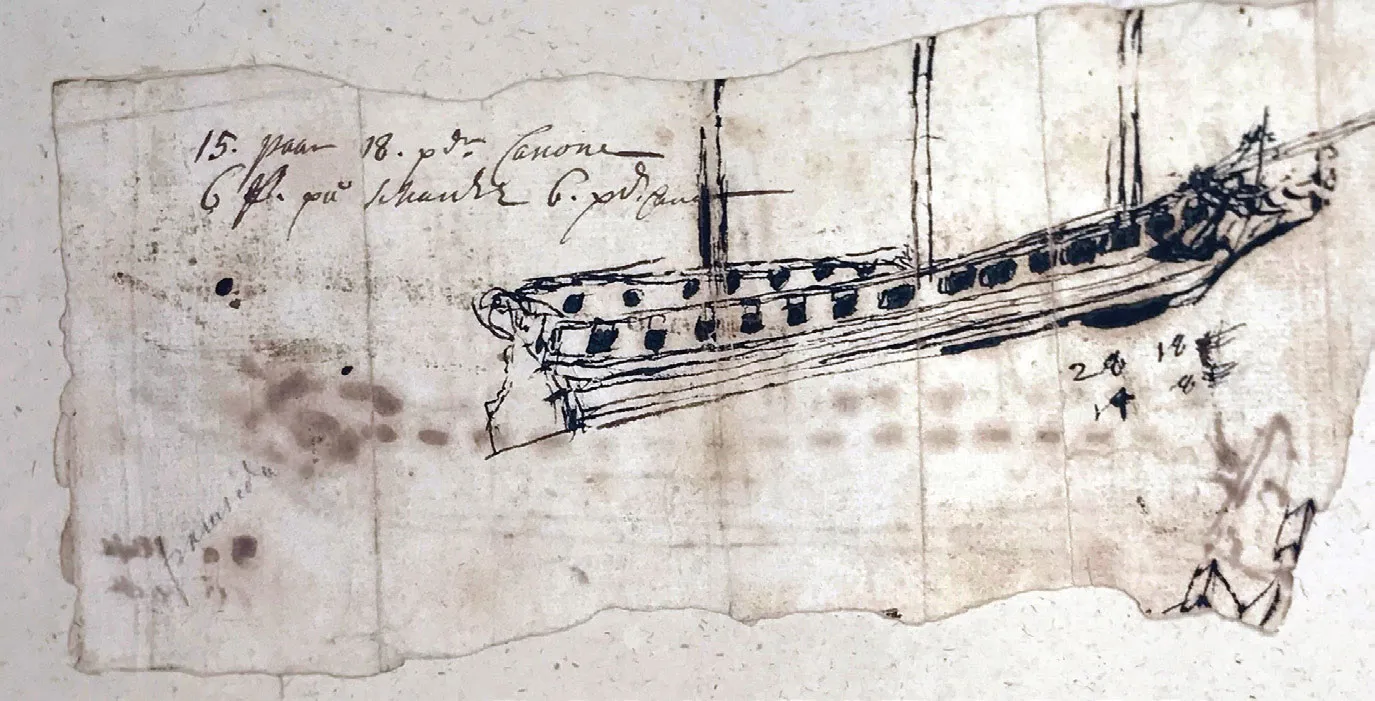
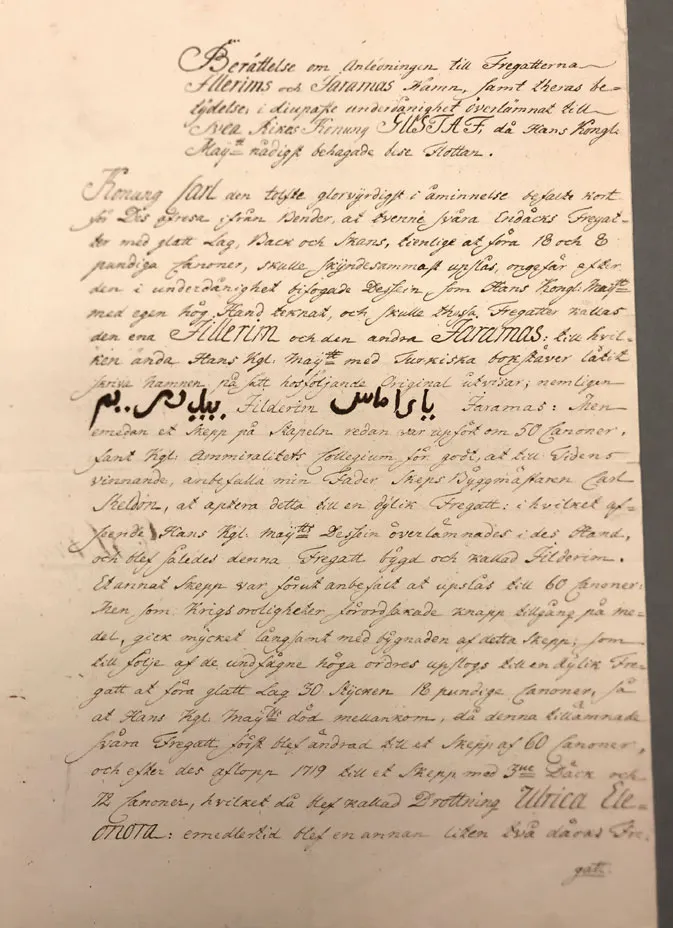
Tsar Peter had built a great navy at St Petersburg. Sweden had no fleet capable of standing against it. Charles knew he could not fight the Russians in the open sea, so he needed light, fast, sudden-strike ships for coastal defence — and the Ottoman ships were exactly the pattern. While under guard at Dimetoka, drawing on Ottoman and Algerian vessels, he sketched two frigates, naming one Jarramas (Yaramaz, “the rascal”) and the other Jilderim (Yıldırım, “lightning”). According to one account, these Turkish names were also the nicknames the Ottoman statesmen had given the king himself.
Before setting out for home in September 1714, Charles sent the two ship drawings to Sweden through his agents. He signed the sketches “Carolus,” and made sure the ships’ Turkish names were written across them in fine calligraphy. He also sent a message to the war council in Stockholm, asking that work on Jarramas and Jilderim begin before he even arrived.
Sweden’s Lucky Ship
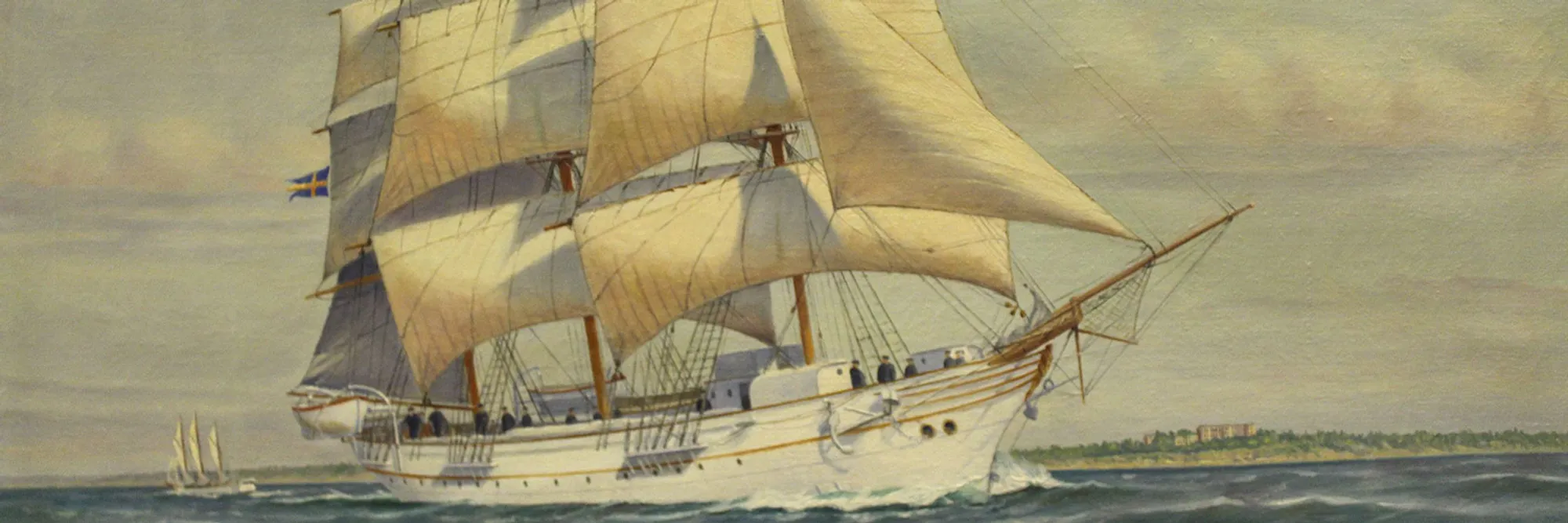
Begun at the Karlskrona shipyard, the Jarramas and Jilderim were completed in 1716. Carrying 44 guns and measuring 39 metres, the third-generation Yaramaz became the pride of the Swedish navy. Bearing the lines of the Turkish ships, the frigate made the Baltic narrow for the Russians from the moment she touched the water. She fought not only the Russians but, in the Seven Years’ War of 1756–1763, sank many British ships in the North Sea, and in 1805 showed her strength against Napoleon’s navy alongside the allies. Jilderim, by contrast, was lost a year after her construction, after an apparent British attack, her crew put ashore at Helsingborg in southern Sweden.
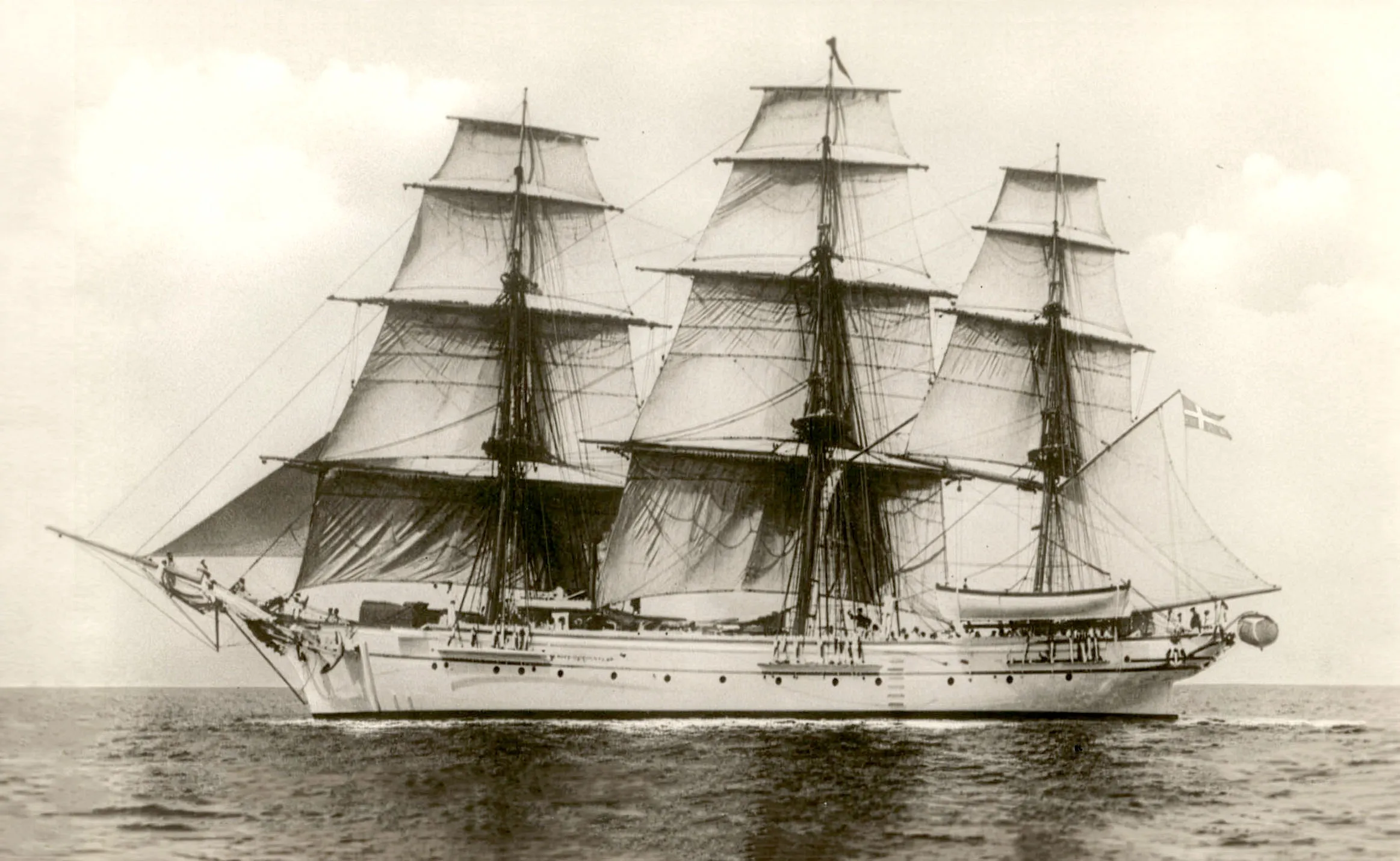
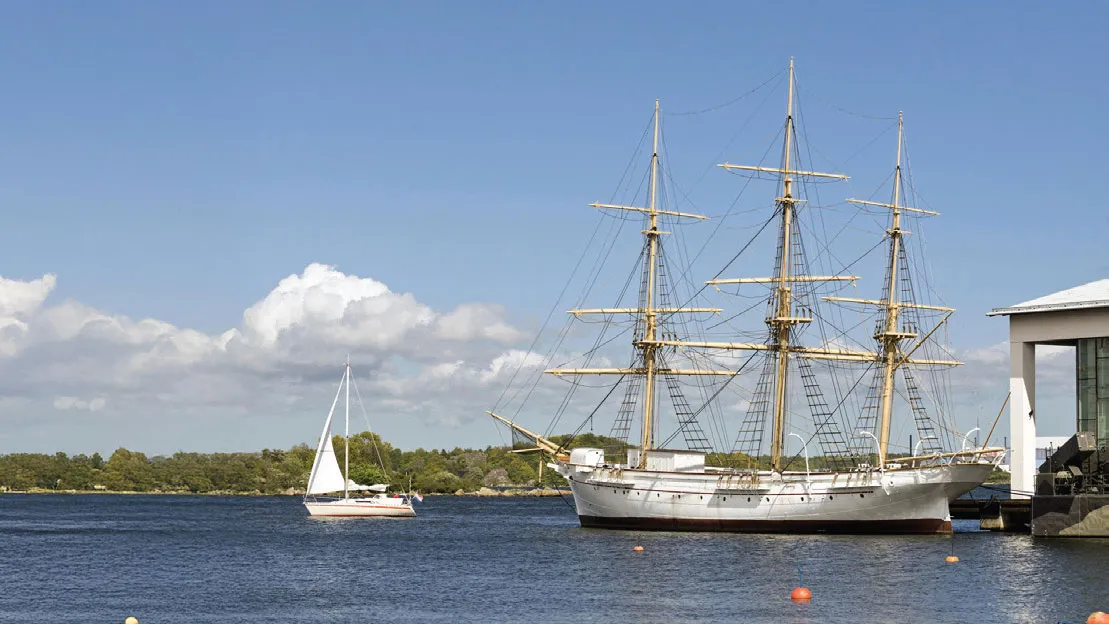
Believed by the Swedes to be lucky, the Jarramas kept her name alive each time she was retired — the name passed to a more modern ship, founding a tradition in the Swedish navy. The fourth-generation, final Jarramas was built, again at Karlskrona, in 1900. Her last military service came in 1944, during the Second World War. Decommissioned in 1946 and sold to the Karlskrona municipality in 1950, she was donated in 1997 to the Swedish Naval Museum, where she is still displayed at the museum quay.
Sources
- Tahir Sevinç, “İsveç Kralı XII. Şarl’ın Osmanlı Devleti’ne İlticası ve İkameti (1709–1714),” Journal of History Studies, vol. 6, no. 1, pp. 139–159.
- Virginia H. Aksan, Ottoman Wars 1700–1789: An Empire Besieged, trans. Gül Çağalı Güven, Istanbul, 2010.
- Mehmet Genç, Osmanlı İmparatorluğunda Devlet ve Ekonomi, Istanbul, 2000.
- Voltaire, The History of Charles XII, trans. Nahid Sırrı, Ankara, 1939.
- Peter From, Kalabaliken i Bender: Karl XII:s turkiska äventyr, 2009.
- Swedish Naval Museum — marinmuseum.se/besok/fartyg/jarramas.
Adapted from “İsveç’in Osmanlı Gemileri Yaramaz ve Yıldırım” by Emre Boyacı, originally published in Yedikıta Dergisi.