

Australia · australia
The Emu War
Australia sent machine guns to stop 20,000 birds. The birds won — and then put themselves on the national coat of arms.
History is full of wars between people — great victories, crushing defeats, ruins, and massacres, all duly recorded in the books. But are wars always fought between people? Not always. Sometimes humans go to war with animals. Australia’s was one of those.
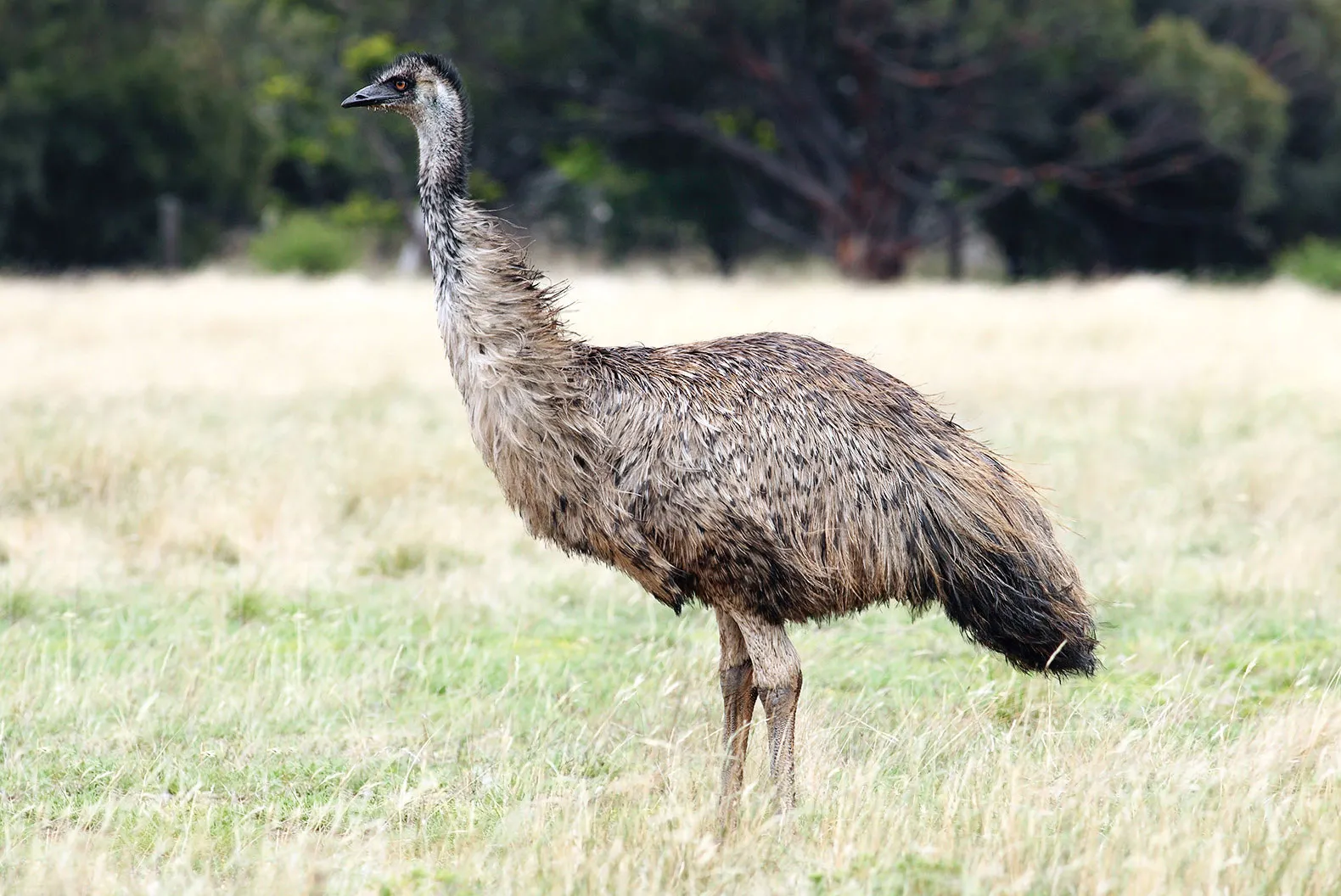
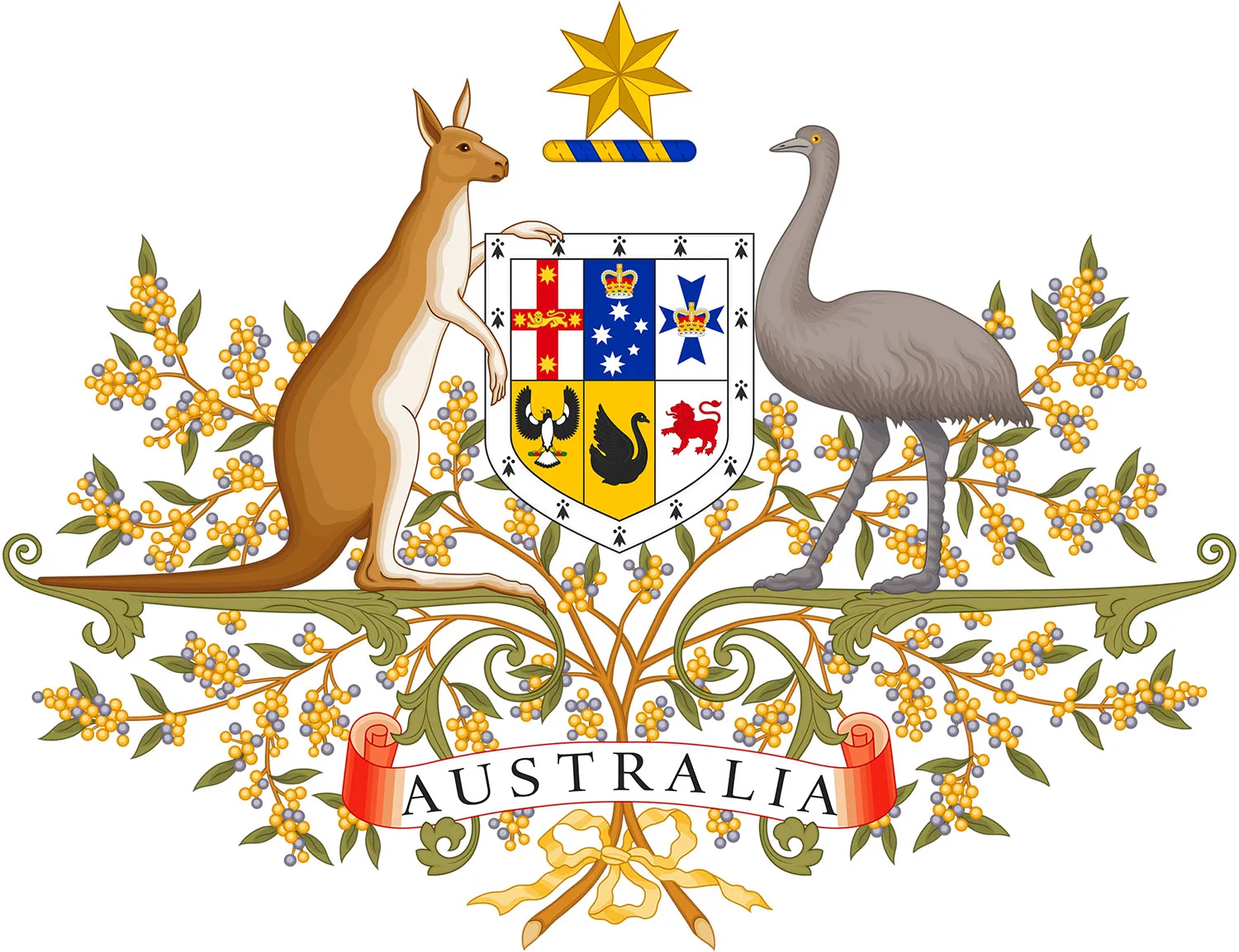
The Australian coat of arms carries two animals: on the left, the kangaroo everyone knows; on the right, a tall running bird called the emu. You may not have heard of it. It is native to Australia and, after the African ostrich, the second-largest bird on Earth. But do not imagine Australia was always glad to have it — because for one strange season, these birds caused the country a great deal of trouble.
A Bird Problem, By Way of a War
After the First World War, returning Australian soldiers wanted to go back to the work they had left: farming. The government granted these veterans some 90,000 hectares of marginal land in the west of the country — land not especially suited to agriculture. What the government had overlooked, or chosen to ignore, was a particular enemy: the emus. The region sat squarely on the birds’ migration route, and when breeding season came, they descended on it in their thousands.
For a few years things held. Then 1929 brought the Great Depression, and it hit the farmers hard. The government leaned on them to grow more wheat, promising subsidies. Wheat prices collapsed instead, and the promised support never arrived. By 1932, things were truly out of hand — and a flock of some 20,000 emus had migrated into the district. The strange chain of events began here.
A metre and a half tall, fast, and agile, the emus ate most of the crops, trampled the rest, and tore great holes in the fences — which then let in the rabbits and other wildlife. The farmers, many of them experienced ex-soldiers, fought back with their own rifles and even with a bounty on each dead bird. It made little difference. The emus were almost impossible to kill: their thick plumage either deflected bullets outright, or they simply outran the gunfire.
And So, War Is Declared
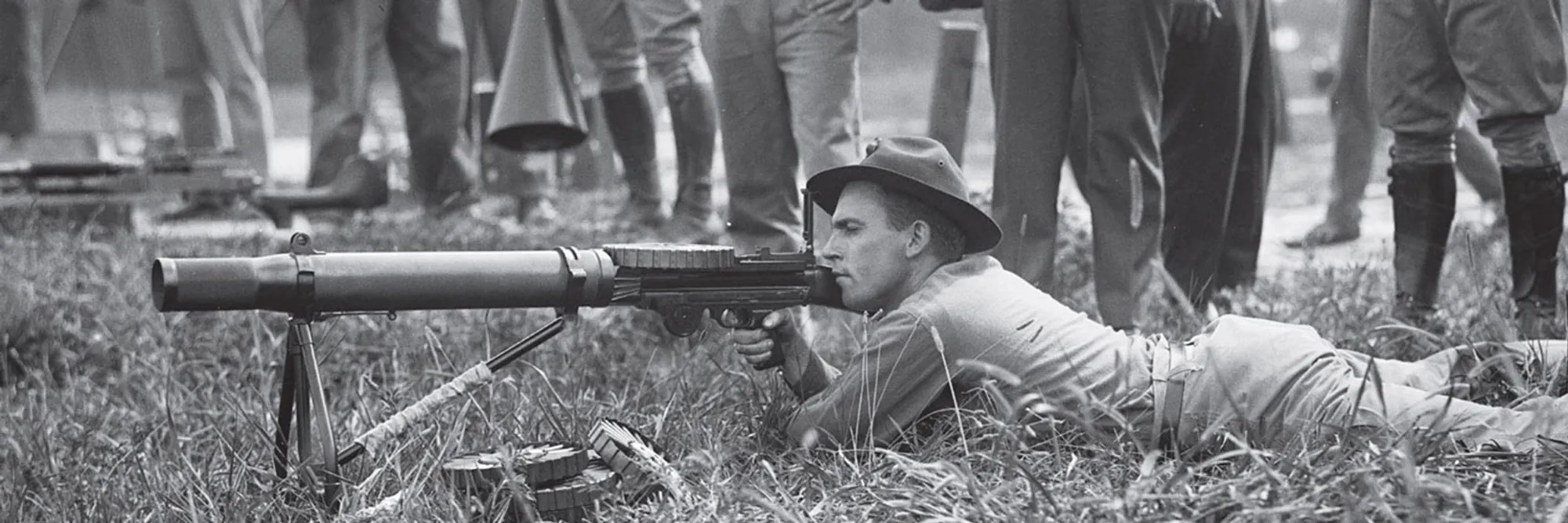
Unable to cope with their own weapons, the farmers asked the Ministry of Agriculture for help. The help they wanted was agricultural; the help they got was military. The Defence Minister of the day, Sir George Pearce, declared war on the emus. Against twenty thousand unarmed, defenceless birds he dispatched a detachment under Major G. P. W. Meredith, armed with Lewis machine guns and thousands of rounds of ammunition. He even sent a film crew to record it — the plan being to use the victory as propaganda, casting the government as the hero that had saved the farmers.
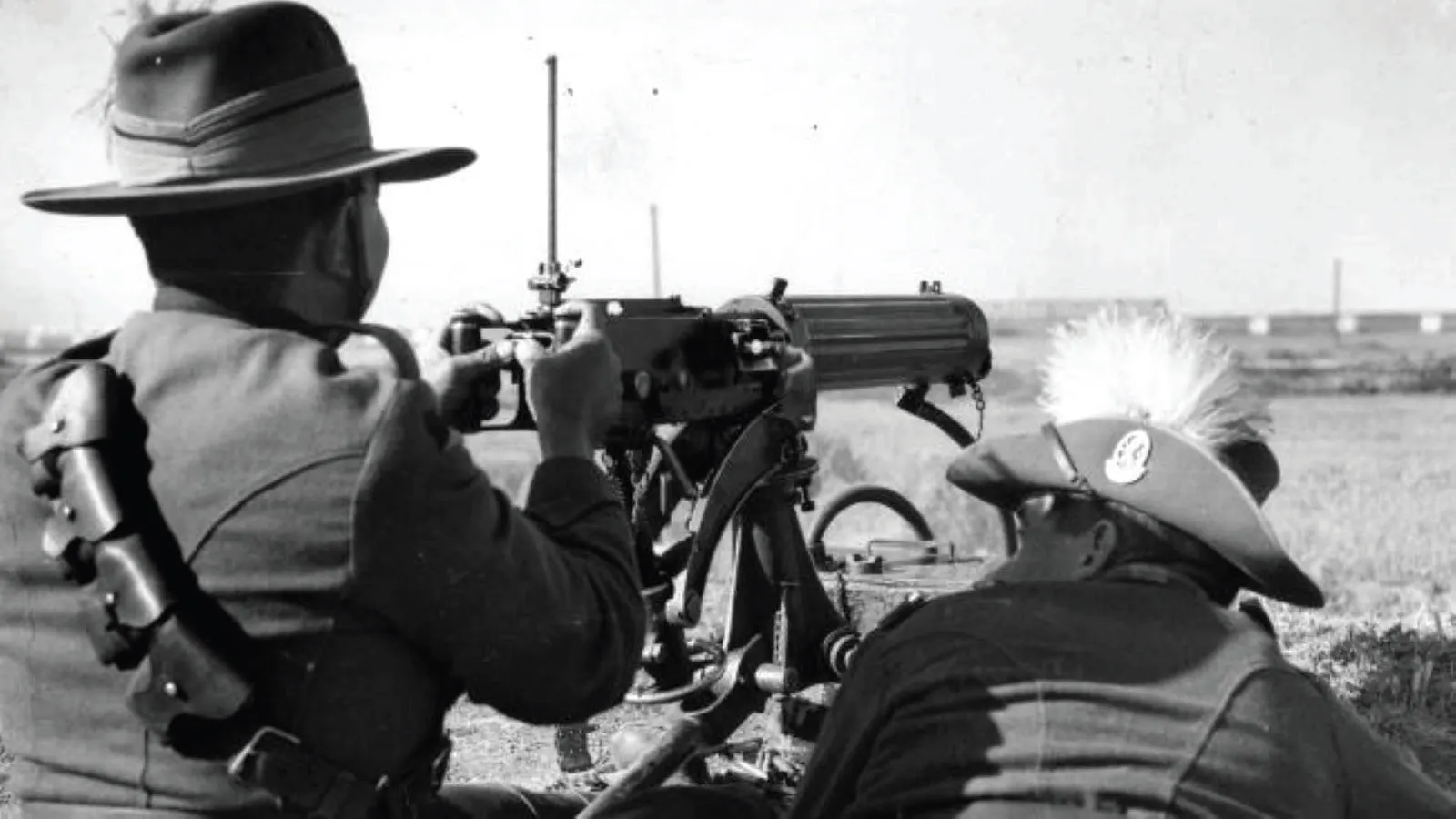
The soldiers were asked to bring back a hundred emu skins as a trophy, and to wear emu feathers in their hats. Eastern newspapers billed the birds as “a dangerous and unpredictable enemy.” The commanders saw it the other way: a brainless, mindless feathered animal that their guns — firing three hundred rounds a minute — would mow down with ease.
It did not go as planned. The first engagement came on 2 November 1932, near Campion. The soldiers opened fire on the flock — and the result was a fiasco. For all the ammunition spent, only about fifty emus were killed. On the second day Meredith tried a new tactic: no more firing in the open; the men would creep up and shoot from cover.
That failed too — twelve dead emus to show for it. Were the birds not as stupid as they looked? No, in fact: they had developed defensive tactics of their own. According to one soldier’s report, the emus split into groups of ten or twenty, each with a leader: while the others stripped the crops, the leader kept watch, and at the first sign of danger the whole group scattered hundreds of metres in seconds.
On the third day, with the lessons of the first two, they tried again: machine guns mounted on the backs of trucks, chasing the flocks down. Did it work? No. The emus heard the engines and simply ran out of range. Tracking the birds across rough ground, aiming, and firing from a moving vehicle proved nearly impossible — and some of the trucks crashed in the attempt.
A Bitter Defeat
The emus’ unexpected resistance left the soldiers stunned. After thousands of rounds in three days, only a handful of birds were dead — roughly one emu for every ten bullets. With statistics like that, the war had to end, and it did. A campaign against these birds could have dragged on for years. The army had, plainly, lost.
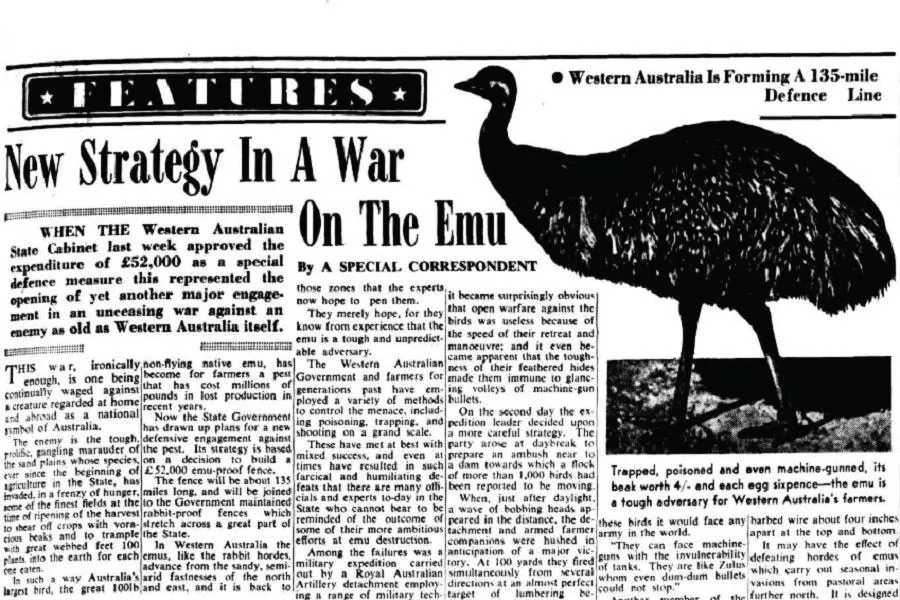
The fiasco became a national joke. The government was openly embarrassed; the Defence Minister had to deny that he had ever sent troops at all, and the soldiers were ordered to withdraw. One newspaper ran the line: the war is over, but no peace treaty has yet been signed — the enemy maintains its claim to the territory it occupies. When, on 9 November 1932, an MP in the Australian Parliament asked whether anyone would receive a medal, another replied: “Yes — an emu.”
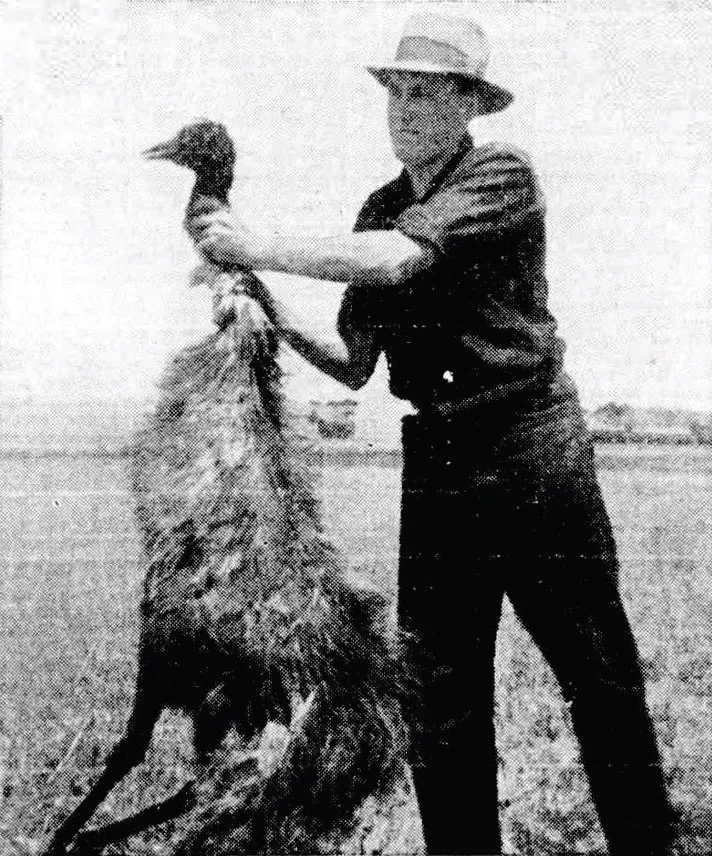
Major Meredith’s own assessment of the birds was, frankly, peculiar: “If we had a military division with the bullet-carrying capacity of these birds, it would face any army in the world. They can face machine guns with the invulnerability of tanks. They are like Zulus, whom even dum-dum bullets could not stop.”
With the soldiers gone, the thousands of emus had the field to themselves and ransacked it. The farmers kept asking for help; no one was listening any more. Three years later another vast flock arrived, and the farmers demanded a second Emu War. The already-humiliated government wanted none of it. Instead it brought back the bounty system — good money, for the time, on every emu beak. Within a year, some 30,000 emus had been culled. The state had used perhaps humanity’s greatest weakness: money. In the 1950s a 200-kilometre fence was finally raised across the district, and the problem was, more or less, solved.
The Bird That Won
Having walked away from their war with Australia victorious, the emus earned their place on the national coat of arms — alongside the kangaroo, the country’s other emblem. Today an estimated 600,000 to 700,000 emus live across Australia, and the species is classed as one of least concern. They won, and they are thriving.
Adapted from “İnsan Kuşa Karşı: Avustralya–Emu Savaşı” by Emre Boyacı, originally published in Yedikıta Dergisi.