
United States · north america
How America Was Bought?
A republic assembled from other people's land — one treaty, one cheque at a time.
Most countries are fought over, inherited, or slowly grown into. The United States is one of the few that was, in large part, bought. Between the Louisiana Purchase of 1803 and the acquisition of the Virgin Islands in 1917, Washington wrote cheques to France, Spain, Mexico, Russia, and Denmark in exchange for more than two-thirds of the land that now sits inside its borders.
This is the story of how a thirteen-colony federation on the Atlantic seaboard turned a continent into a receipt — and why the same instinct is still alive in the twenty-first century, every time an American president talks idly about buying Greenland.
A Continent Before the Cheques
There was, of course, a continent here long before Europeans drew a line on it. The Americas were home to civilisations on a scale Europe only dimly understood — the Aztec, the Maya, the Inca — alongside hundreds of smaller nations whose names rarely made it into English schoolbooks. When Genoese sailor Christopher Columbus dropped anchor in the Caribbean in October 1492, he thought he had reached the East Indies and called the people he met Indians. The name stuck, wrongly, for half a millennium.
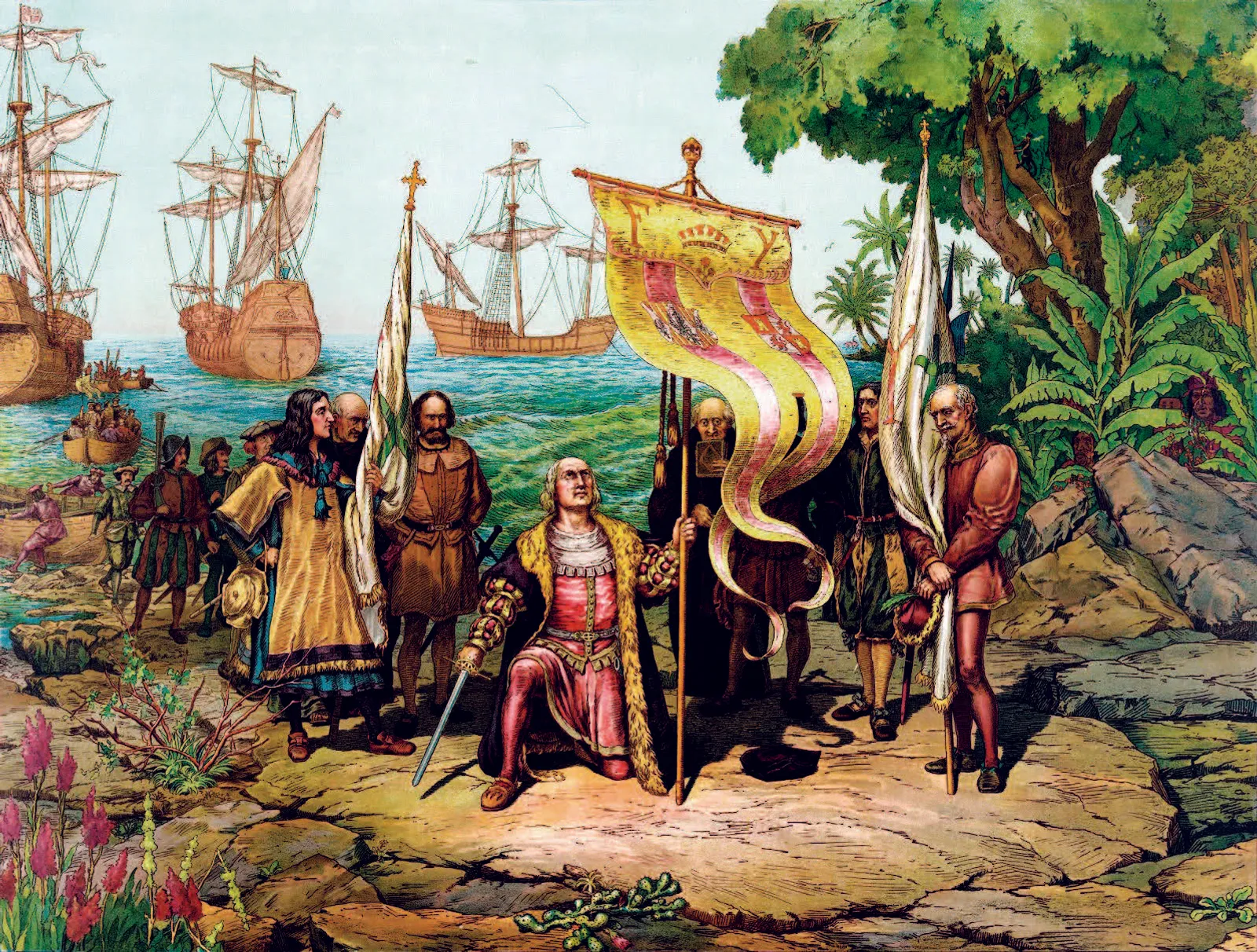
Columbus had sailed under Spanish colours, and Spain collected the first prize. Portugal joined the rush in 1500, France in 1534, England in 1603. Within a century the Atlantic had become a highway for anyone on the European coast with a ship and a grievance.
Their motives diverged from the first moment. The Spanish wanted silver and gold, and they went where those ran cheap and deep. The French wanted trade — furs, mostly, and allies. The English wanted land, and they brought families. It would turn out, centuries later, that the last model was the one that would keep the continent.
Those Who Came With Steel
What the three Europes had in common was leverage the Americas could not match: firearms, wheeled transport, deep-water navigation, and, above all, epidemics. Smallpox, measles, and influenza preceded every European army by months and sometimes years. By the time conquistadors reached a given valley, its population had often already collapsed.
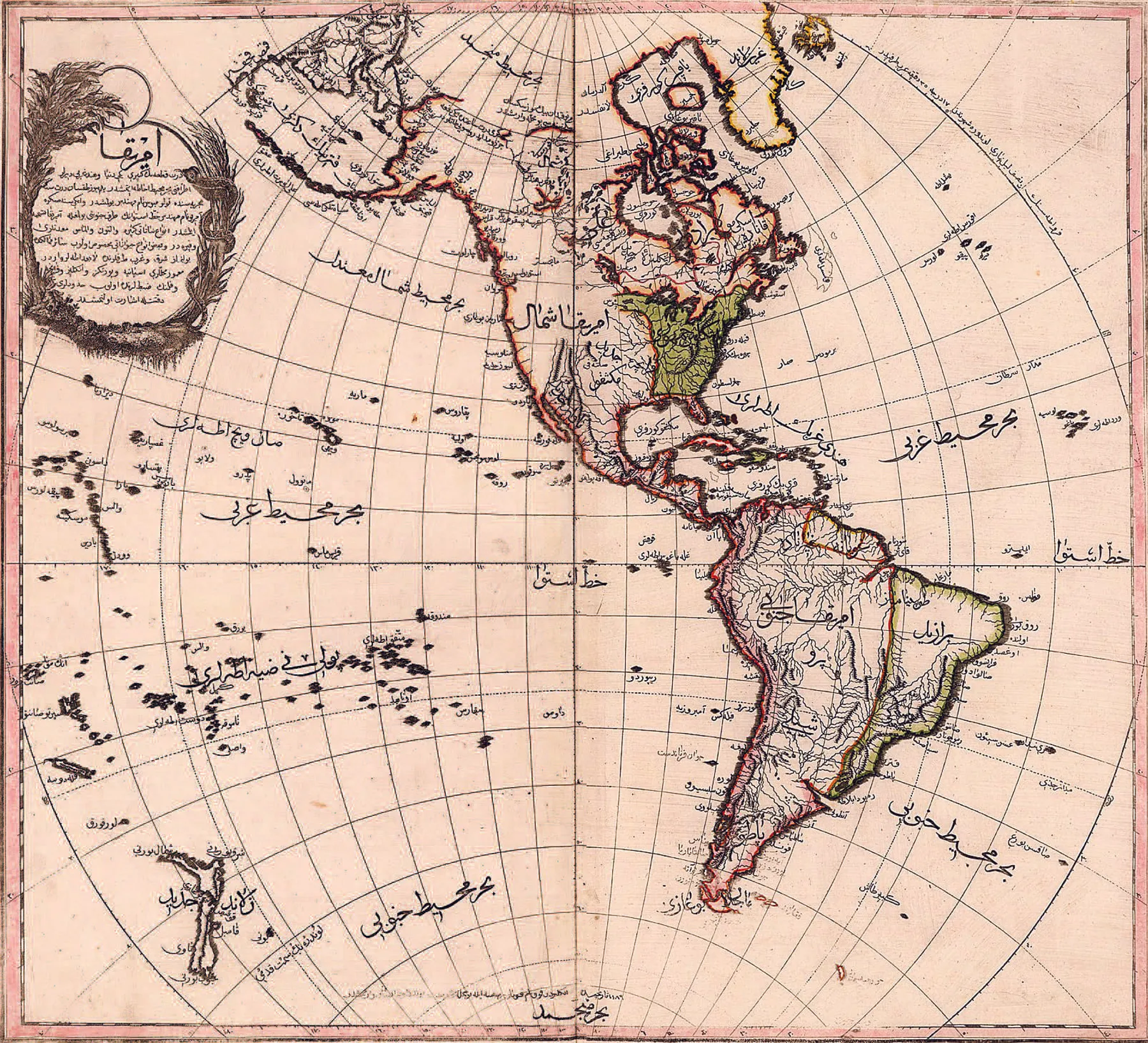
In the English colonies along the eastern seaboard, the land that would become the United States, the population of settlers went from roughly 275,000 in the early 1700s to 1.5 million by mid-century. Thirteen colonies, each with its own charter, its own governor, and its own quarrel with London.
Independence, at a Price
The colonies’ first serious crisis arrived as a tax bill. The Seven Years’ War (1756–1763) had been, in Europe, a brawl between Britain and France. In North America, it had been fought in their names by colonists and indigenous allies on both sides, and by the time it ended, Britain owned most of the continent east of the Mississippi — and the debt that came with it.
London tried to collect that debt from the colonies. The colonies refused. What followed — the tea, the declarations, the long war of Continental attrition — is a story Americans tell very well by themselves. What matters here is the outcome: on 4 July 1776, thirteen colonies declared themselves a nation, and seven years of fighting later, under the command of George Washington, they forced Britain to agree.
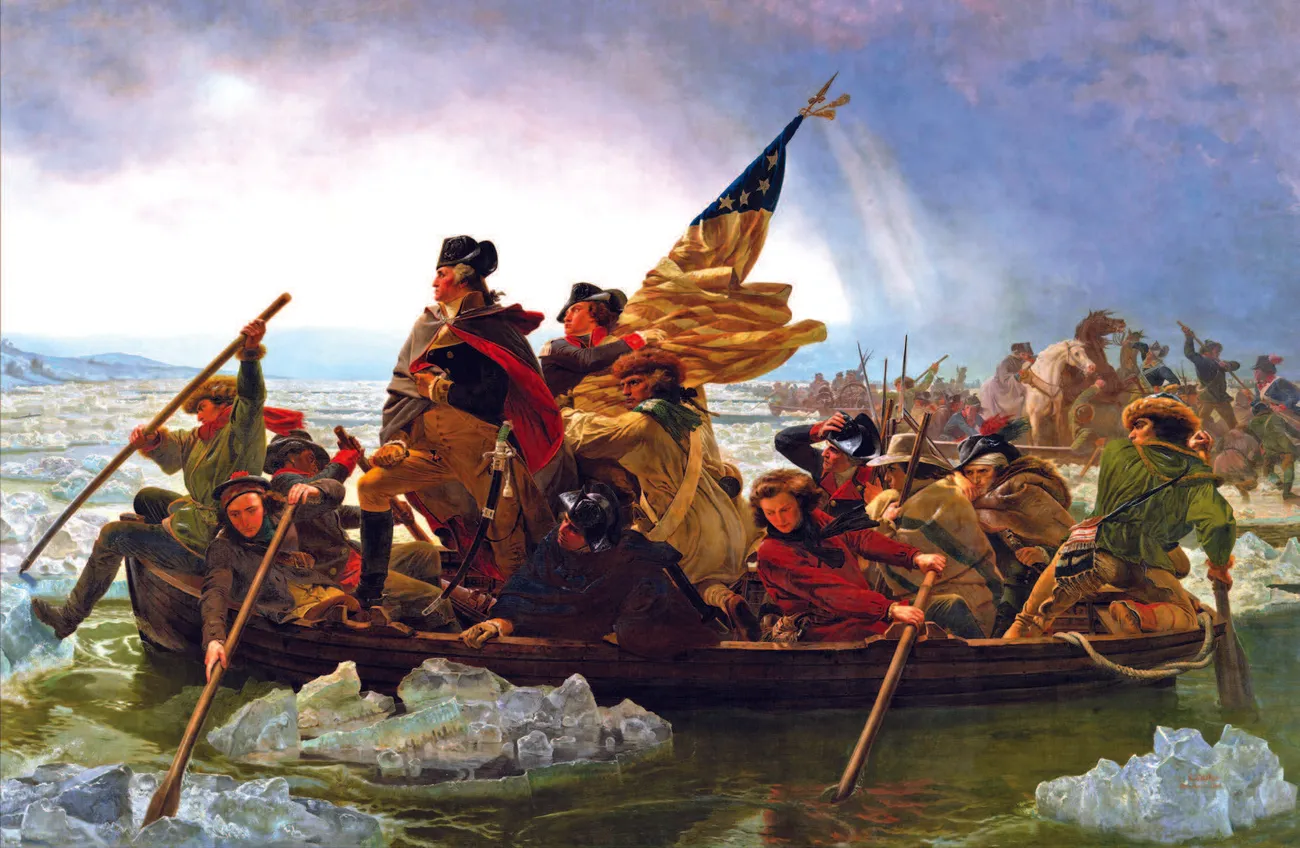
In 1783 the new country was a narrow strip of 3.5 million people facing the Atlantic. Westward, the land belonged to France, Spain, Britain, Russia — and, of course, the nations who had been there all along. Within a lifetime, the United States would buy most of it.
Sold, As Is
What followed is one of the strangest property sprees in the history of any modern nation. Between 1803 and 1917, the United States transformed itself from a coastal republic into a continental superpower — largely by cheque.
- 1803 — Louisiana. Napoleon, short of cash and at war with half of Europe, sold France’s vast interior territory — roughly 2.1 million square kilometres — to President Jefferson for about 60 million francs plus 20 million in assumed debt, or some $15 million. It doubled the size of the United States overnight. In per-acre terms, it remains one of the cheapest real-estate deals ever closed.
- 1819 — Florida. Spain ceded Florida to the US under the Adams–Onís Treaty, in exchange for the American government taking on roughly $5 million of settlers’ claims against Madrid.
- 1845 — Texas. Not a purchase in the strict sense: Texas had already broken from Mexico, and the US annexed the independent republic. But the war that followed was a debt the Treasury would eventually settle.
- 1846 — Oregon Country. A treaty with Britain, not Spain as some older accounts claim, drew the 49th parallel across the continent. The Pacific Northwest passed to the US without money changing hands — but with the implicit threat of another war.
- 1848 — the Mexican Cession. At the end of the Mexican–American War, Mexico surrendered what would become California, Nevada, Utah, most of Arizona and New Mexico, and parts of Colorado and Wyoming — in exchange for $15 million and the cancellation of $3.25 million in claims.
- 1867 — Alaska. Russia, cash-strapped and convinced it could not defend the territory against Britain from faraway St Petersburg, sold Alaska to Washington for $7.2 million — about two cents an acre. Critics at the time called it “Seward’s Folly.” Gold was found thirty years later.
- 1898 — Hawai’i. Annexed rather than bought, after American planters and marines overthrew the Hawaiian monarchy in 1893.
- 1917 — the US Virgin Islands. Denmark sold its Caribbean colony of three inhabited islands for $25 million in gold — still the most the US had ever paid, per square kilometre, for territory.
By the time the ink dried on the Virgin Islands treaty, the United States had gone from a nation of thirteen states to one of forty-eight, with outposts in the Pacific and the Caribbean. Not one of those later states was founded by pilgrims. Most had been paid for.

The Stars Kept Multiplying
Every state admitted to the Union got a star on the flag — which is why the American flag has been redrawn more than two dozen times. The current fifty-star design, the longest-serving version, has flown only since 1960, when Hawai’i became the fiftieth state. The thirteen red-and-white stripes, by contrast, have never changed: one for each of the original colonies that wrote the cheque-writing into the national character in the first place.
They Left, Their Names Stayed
Many of the bought territories kept the names of the people who sold them.
- New England — the colonial name for the north-east, literally Yeni İngiltere, survived intact after independence.
- Louisiana — named for Louis XIV of France, kept its royal French name a full century after France sold it.
- Indiana — “land of the Indians,” a settler coinage that kept a misremembered word alive into the twenty-first century.
- North and South Carolina — named for the English kings Charles I and Charles II, respectively.
- New Mexico — still named for the country that lost it.
The map, in other words, is a receipt.
The Last Transaction
The logic that built the United States by cheque has never entirely gone away. In 1946 President Truman privately explored buying Greenland from Denmark for $100 million in gold. In 2019 and again in 2025, the suggestion was raised openly — and publicly refused by Copenhagen each time. What was once the language of ordinary nineteenth-century diplomacy has become a kind of inherited reflex: when in doubt, make an offer.
There is a peculiar honesty to this history, once you stop expecting empires to be sentimental. Spain fought for its colonies. Britain lost its. France let go of its to fund a war. The United States, for most of its first century, simply waited for the price to drop.
Sources
- George Clack (ed.), An Outline of U.S. History, U.S. Department of State.
- İhsan Burak Birecikli, “The Founding of America and U.S.–European Relations (1776–1876),” History Studies, Special Issue on U.S. and Greater Middle East Relations, 2011.
- J. B. Wight, An Outline of the History of the United States, 1953.
Adapted from “Satın Alınan Ülke: ABD” by Tuna Ser, originally published in Yedikıta Dergisi issue 138, February 2020. Seven History does not endorse the nineteenth-century premise that land belonged only to those who could purchase it from a distant capital. The story above deliberately tells the transaction as it was recorded in European treaty books — a perspective that leaves out the indigenous nations who were never party to the sales and, in many cases, never consulted about them. Their side of the story is a story on its own.